You Won’t Believe What I Found Painting in the Heart of the Amazon
Iquitos, Peru—surrounded by rainforest and reachable only by boat or plane—feels like the edge of the world. I went not just to explore the jungle, but to dive into its vibrant art scene. What I discovered was mind-blowing: local artists using nature as both canvas and muse. From murals telling ancestral stories to handmade crafts bursting with color, art here breathes life into the Amazon’s soul. This isn’t just sightseeing—it’s feeling the rhythm of a culture through creativity.
Arrival in Iquitos: The Gateway to Amazonian Art
Touching down in Iquitos is like stepping into another time. As the largest city in the Peruvian Amazon that cannot be reached by road, it remains isolated from the mainstream flow of tourism and development. The journey itself—either a two-hour flight from Lima or a multi-day river voyage—prepares visitors for something rare and untouched. From the moment I stepped off the plane, the air was thick with humidity and the scent of wet earth, a sensory introduction to the rainforest that cradles the city on all sides.
The streets of Iquitos pulse with color and sound. Brightly painted wooden houses line narrow roads, their shutters flung open to catch the breeze. Roosters crow from backyards, children chase each other through puddles, and the occasional sloth might be spotted clinging to a power line—a quiet reminder of how close nature lives here. But what struck me most was the art. Everywhere I looked, there were expressions of creativity: hand-painted signs advertising fruit juice, carved wooden masks hanging outside homes, and textiles dyed in deep jungle hues. This wasn’t decoration; it was communication, identity, survival.
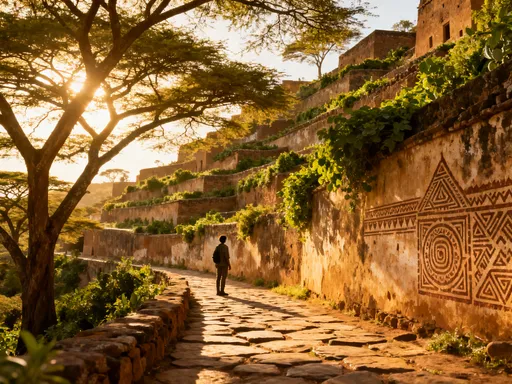
Art in Iquitos is not separate from life—it is woven into it. For indigenous communities like the Bora, Yagua, and Ticuna, artistic expression has long been a way of preserving history, transmitting spiritual beliefs, and asserting cultural continuity in the face of change. The motifs found in local crafts—spirals representing the anaconda, zigzags symbolizing rivers, and radiant suns honoring deities—are not random designs. They are a visual language, passed down through generations. Understanding this transforms the way one sees every painting, every woven pattern, every carved figure.
The Pulse of Creativity: Exploring Local Galleries and Artist Studios
My first stop was the Nihui Artisan Workshop, a community-run space nestled in the heart of Belén, a riverside district known for its stilt houses and vibrant cultural life. The building, made of reclaimed wood and open to the elements, buzzed with activity. Artists of all ages were bent over canvases, carving gourds, or mixing natural pigments in clay bowls. Unlike commercial galleries that cater to tourists, Nihui functions as both a studio and a school, where elders teach traditional techniques to younger members of the community.
I met Rosa, a Ticuna artist in her fifties, who has been painting since childhood. She showed me her latest piece—a large canvas depicting a shamanic journey through the spirit world, rendered in bold reds, yellows, and blacks. The colors came from sources she gathered herself: achiote seeds for red, charcoal for black, and clay for yellow. Her brushwork was precise, each line carrying symbolic weight. She explained that in her culture, art is not made for sale or display alone—it is a form of prayer, a way of maintaining balance between humans and nature.
What sets Amazonian art apart is its deep material connection to the environment. Artists here don’t rely on imported paints or synthetic fabrics. Instead, they use what the forest provides. Bark from the chambira palm is woven into baskets and mats. Seeds from the tambaqui tree are strung into necklaces. Even the paper used in some mixed-media works is handmade from recycled plants. This sustainable approach isn’t just practical—it reflects a worldview in which humans are part of the ecosystem, not separate from it.
Several small galleries in central Iquitos, such as Galería de Arte Amazónico and Casa de la Juventud, offer curated exhibitions that blend traditional and contemporary styles. One striking trend is the fusion of ancestral iconography with modern mediums. I saw a series of digital prints that reimagined ancient petroglyphs as abstract compositions, and a sculpture made from reclaimed riverwood shaped like a jaguar, its eyes inlaid with polished river stones. These works demonstrate that Amazonian art is not frozen in time—it evolves, adapts, and speaks to new generations while honoring its roots.
Hands-On Experience: Joining a Traditional Craft Workshop
No visit to Iquitos would be complete without trying to create something with my own hands. I signed up for a huaringa workshop at a cultural center run by the Bora people. Huaringas are intricately painted gourds that traditionally served as ceremonial objects, often used in healing rituals. Today, they are also made for cultural preservation and as a source of income for families.
The process began with selecting a dried gourd, its surface smooth and pale like ivory. My instructor, a young woman named Maribel, guided me through each step. First, we sketched the design using a soft charcoal stick. I chose a pattern inspired by the movement of water—curving lines that mimicked river currents. Then came the painting. Using fine-tipped brushes made from animal hair, I applied natural dyes: deep red from achiote, black from genipa fruit, and white from kaolin clay. The pigments had to be mixed just right—too much water and they’d run; too little and they wouldn’t adhere.
Painting the huaringa was meditative. Each stroke required focus, patience, and respect for the tradition behind it. Maribel explained that the designs are never random. Spirals represent the path of the soul, diamonds stand for the eyes of the jaguar spirit, and concentric circles echo the rings of a tree—symbols of growth and memory. As I worked, I began to understand that this wasn’t just craft; it was storytelling, spirituality, and resistance all at once. In a world where indigenous cultures are often erased or assimilated, making a huaringa is an act of cultural affirmation.
By the end of the session, my gourd was far from perfect—some lines were uneven, and the red bled slightly into the black. But it didn’t matter. What mattered was the connection I felt—to the material, to the artist guiding me, and to the centuries of people who had made similar objects for similar reasons. Holding my huaringa, I realized that travel isn’t just about seeing new places; it’s about doing, feeling, and becoming part of something larger than oneself.
Street Art with a Story: Murals That Speak for the Rainforest
One afternoon, I wandered through the neighborhood of San Juan, known for its open-air market and, increasingly, its powerful street art. What I found was unexpected: entire walls transformed into vivid narratives of jungle life, spiritual beliefs, and urgent environmental messages. These murals weren’t graffiti in the Western sense—they were carefully planned, community-approved works created by local and visiting artists to celebrate Amazonian identity and sound the alarm about deforestation.
One mural stopped me in my tracks. It spanned the side of an old school building, its surface cracked but alive with color. On one side, a lush rainforest teemed with animals—pink river dolphins, macaws, and a family of monkeys swinging from vines. On the other, the same landscape was reduced to stumps and smoke, with a lone child standing in the ashes, holding a single green leaf. The message was clear: this is not a distant threat. This is happening now.
Another mural depicted a Yagua elder with closed eyes, his face merging with the roots of a giant ceiba tree. Above him, the words “Nuestro árbol es nuestra vida” — “Our tree is our life” — were painted in bold letters. The artwork didn’t feel preachy or foreign; it felt deeply rooted in local experience. These murals are more than decoration—they are public education, cultural pride, and activism rolled into one.
What impressed me most was how the community embraced these works. Children played beneath them, shop owners hung lights around their edges, and elders paused to point them out to grandchildren. Art, in this context, becomes a shared language. It transcends literacy, age, and even language barriers. A tourist might not understand every symbol, but the emotion—the love for the forest, the grief over its loss—comes through unmistakably. In a place where deforestation rates remain high and indigenous land rights are often ignored, these murals are quiet acts of resistance, painted in daylight for all to see.
Art on the River: Floating Markets and Creative Commerce
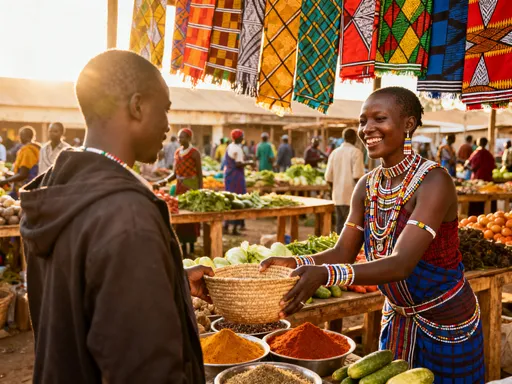
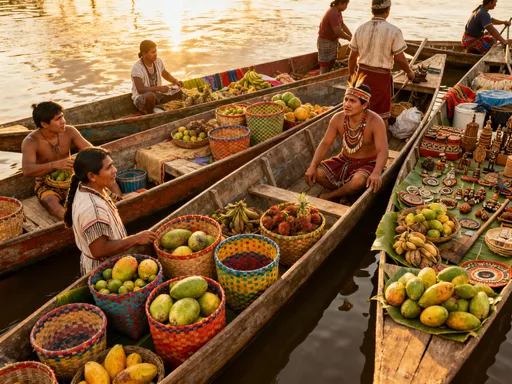
No experience in Iquitos is more immersive than visiting the Belén floating market. Built on rafts and connected by wooden walkways, this bustling marketplace rises and falls with the water level of the Amazon River. At dawn, canoes glide in from surrounding villages, carrying everything from fresh fish and plantains to hand-carved figurines and painted textiles. The air hums with bartering, laughter, and the rhythmic tapping of hammers as vendors repair their stalls.
What makes Belén special is that it’s not a tourist attraction staged for cameras—it’s a living economy. Families have been selling here for generations, and their crafts are made for use as much as for beauty. I watched a woman weave a basket from chambira fibers, her fingers moving with practiced speed. Nearby, a man sanded down a wooden jaguar, preparing it for paint. These objects aren’t souvenirs; they’re extensions of daily life, made from materials gathered from the forest and river.
I bought a small painted bowl from a vendor named Don Teodoro, who told me it was made from balsa wood and decorated with motifs of the ayahuasca vine—a sacred plant in his community. He didn’t speak much English, but his pride in his work was evident. Every piece he sold helped pay for his grandchildren’s school supplies, he explained through a translator. This is the quiet power of art-based tourism: it creates sustainable income without requiring people to leave their homes or abandon their traditions.
Supporting these artisans isn’t just ethical—it’s transformative. When travelers buy directly from makers, the money stays in the community. There’s no middleman, no mass production, no plastic knockoffs. Instead, there’s dignity, continuity, and hope. And for the visitor, the object carries meaning far beyond its size or price. That little bowl, now on my shelf back home, isn’t just a decoration. It’s a story, a connection, a reminder of a conversation across cultures.
Nature as Muse: Painting En Plein Air in the Amazon
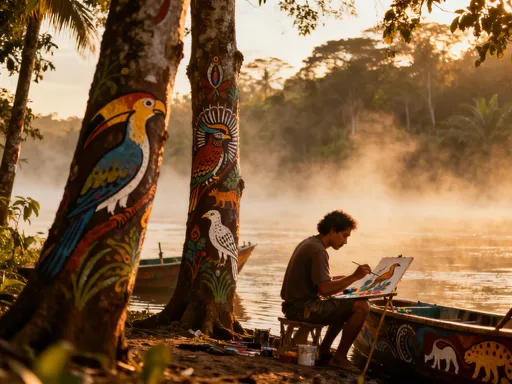
One of the most profound moments of my trip came during a sunrise painting session organized by a local artist collective. We gathered at a quiet bend of the Amazon River, just outside Iquitos, with easels, sketchbooks, and natural pigments in hand. The goal wasn’t to produce a masterpiece, but to respond to the environment—to let the jungle shape our art.
As the sun rose, the river shifted from black to gold. Mist curled off the water like smoke, and the first calls of howler monkeys echoed through the trees. Birds—scarlet macaws, blue-and-yellow tanagers—flashed through the canopy. The air was alive with sound, scent, and movement. I dipped my brush into a mix of achiote and water and began to paint, not what I saw, but how I felt. My strokes were loose, emotional, guided more by instinct than technique.
Our guide, a mestizo artist named Javier, encouraged us to listen before we painted. “The jungle speaks,” he said. “If you’re quiet, it will tell you what to create.” And in that moment, I believed him. There was no pressure to be perfect, no judgment, only presence. My painting turned out abstract—swirls of red, green, and brown that looked more like a heartbeat than a landscape. But it captured something true: the overwhelming vitality of the Amazon, the sense of being small in the face of something ancient and immense.
This kind of artistic immersion changes you. It slows you down. It makes you observe—the way light filters through leaves, the texture of bark, the rhythm of the river. It teaches you to see not just with your eyes, but with your whole body. And when you return home, that awareness lingers. You notice details you never did before. You feel more connected—to nature, to art, to the idea that creativity is not a skill, but a way of being in the world.
Why This Experience Changes the Way You See Travel
Most tourism in the Amazon focuses on wildlife viewing, river cruises, or survival adventures. While these have their place, they often keep travelers at a distance—observers behind binoculars, passengers on a boat, guests in a lodge. Engaging with local art, however, breaks down that barrier. It invites participation. It demands attention. It fosters empathy.
When you paint a huaringa, you’re not just making a craft—you’re stepping into a worldview. When you stand before a mural about deforestation, you’re not just seeing a picture—you’re hearing a plea. When you buy a hand-carved bowl, you’re not just acquiring an object—you’re supporting a family, preserving a tradition, honoring a culture. This kind of travel is not passive. It’s reciprocal. It gives as much as it takes.
Moreover, art-based tourism supports cultural preservation in a meaningful way. Unlike mass tourism, which can erode traditions through commercialization, creative exchange empowers communities to share their heritage on their own terms. It allows them to say: This is who we are. This is what we value. This is how we see the world. And for the traveler, it offers a rare gift—the chance to move beyond sightseeing and into understanding.
In a time when so much of the world feels homogenized—chain stores, standardized hotels, algorithm-driven experiences—places like Iquitos remind us of the beauty of difference. The art here is not polished for export. It’s raw, alive, and deeply human. It doesn’t conform to Western aesthetics or market trends. It follows the rhythm of the river, the patterns of the forest, the wisdom of ancestors. To witness it is to remember that there are other ways of living, other ways of creating, other ways of being.
Travel that centers on art doesn’t just show you a new place—it changes how you see yourself. It reminds you that creativity is universal, but its expressions are infinitely diverse. It teaches you to listen before you speak, to observe before you judge, to participate with humility. And in doing so, it transforms adventure from something you do into something you become.
Art in Iquitos is not a performance for tourists—it’s a living, breathing expression of resilience and identity. By stepping into the creative world of Amazonian artists, travelers don’t just see a place; they feel its heartbeat. This kind of experience redefines adventure, turning it into something thoughtful, transformative, and profoundly human.