What I Discovered About Kamakura’s Quiet Culture Will Blow Your Mind
Kamakura isn’t just temples and tourists. Behind the famous Great Buddha lies a world of subtle traditions—tea in hidden gardens, silent zazen sessions, and artisans shaping centuries-old crafts. I went not to check sights off a list, but to feel the rhythm of a quieter Japan. What I found wasn’t spectacle, but stillness. This is not a guidebook journey. It’s a personal dive into the cultural soul many miss. In a country often associated with bullet trains, neon lights, and bustling metropolises, Kamakura offers a different pulse—one measured in breaths, in raked gravel, in the quiet passing of generations. It is a place where history doesn’t shout; it whispers. And if you listen closely, it changes how you travel, and perhaps, how you live.
The Pull of a Different Japan
Kamakura stands apart from the rhythms of modern Japan, not because it rejects progress, but because it has never needed to perform tradition for outsiders. As the seat of Japan’s first shogunate in the 12th century, this coastal town once held political power, but today, its influence is spiritual and cultural. Nestled between forested hills and the Pacific Ocean, Kamakura exudes a calm that feels both earned and intentional. Unlike Kyoto, where heritage is curated and celebrated in grand festivals, or Tokyo, where innovation drives every corner, Kamakura lives its history quietly. There is no need to dramatize the past when it still breathes in the present.
From the moment I arrived by train, the shift was palpable. The station exit opens onto Komachi Street, a lively lane of food stalls and small shops, yet even here, the energy is contained, intimate. A few steps beyond, the noise fades. I walked toward Tsurugaoka Hachimangu Shrine early one morning, arriving as the first rays of sunlight gilded the torii gate. The courtyard was nearly empty—just a few locals bowing quietly before the main hall, a gardener trimming moss along a stone path, the soft chime of a wind bell. There were no tour groups, no loud voices, no sense of urgency. It was not a staged moment of serenity; it was simply the morning in Kamakura.
This is what drew me: a place where culture is not a performance for visitors, but a daily practice for residents. The samurai who once ruled here valued discipline, loyalty, and inner strength—values that still echo in the town’s demeanor. The Zen temples that flourished under their patronage remain active centers of contemplation, not museum pieces. Monks still rise before dawn to chant sutras. Artisans still shape wood, lacquer, and bamboo with techniques unchanged for centuries. These are not reenactments; they are continuations. To experience Kamakura deeply is to understand that culture is not something you see—it is something you absorb, like the ocean mist on your skin.
The Art of Slow Observation: Temples as Living Spaces
Most visitors to Kamakura follow a well-worn path: the Great Buddha at Kotoku-in, the bamboo grove near Hase Temple, the view from Kamakura-gu. These sites are beautiful, but they represent only one layer of the town’s spiritual depth. I chose instead to focus on temples where life unfolds quietly, where rituals are not interrupted for photographs, and where presence is more important than spectacle. At Kencho-ji, the head temple of the Rinzai Zen school in Japan, I was granted rare permission to observe morning zazen, or seated meditation. The experience required silence, stillness, and a willingness to let go of expectations.
I arrived before sunrise, removing my shoes at the gate and following a monk’s gesture to sit on a cushion in the meditation hall. The room was dim, lit only by candles. Around me, monks in gray robes sat in perfect stillness. The instruction was simple: focus on the breath, let thoughts pass like clouds. At first, my mind raced—planning the day, replaying conversations, noticing every creak of the wooden floor. But as the session continued, something shifted. The silence became less empty and more full—a presence, a kind of listening. When the bell finally rang, marking the end, I felt grounded in a way I hadn’t in years.
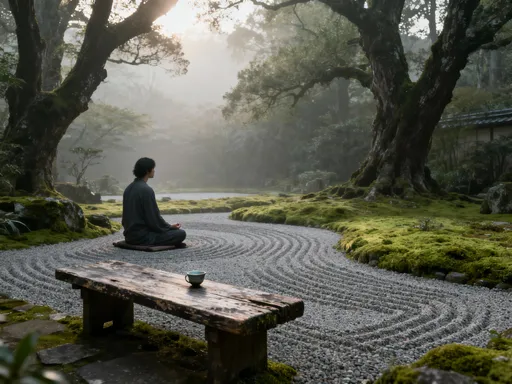
This was not a tourist activity. No tickets were sold, no guides explained the process. It was a moment of inclusion, granted only because I had approached with humility and respect. Later that week, I visited Jomyoji, a smaller temple tucked into the hills behind the city. There, an elderly caretaker spent an hour raking the gravel garden into perfect concentric waves. He did not pause for photos or conversation. When I asked a temple volunteer why he performed this task daily, she smiled and said, “It is not for beauty. It is for clarity.” The act of raking, like zazen, is a form of moving meditation—a way to align the mind with the present.
These temples are not frozen in time. They are living institutions where spiritual practice shapes daily life. Visitors are welcome, but they are expected to observe quietly, to dress modestly, and to refrain from disrupting rituals. At Engaku-ji, another major Zen temple, I watched a young monk sweep leaves from a stone courtyard with deliberate, unhurried motions. Each stroke of the broom followed a pattern, not for cleanliness alone, but as part of training in mindfulness. To witness such moments is to understand that in Kamakura, spirituality is not separate from daily tasks—it is woven into them.
Hands-On Heritage: Meeting Local Artisans
If Kamakura’s temples preserve inner stillness, its artisans preserve outer form—the tangible expressions of a culture refined over centuries. I spent an afternoon with a family that has practiced kamakura-bori, a distinctive style of wood carving and lacquerware, for over a hundred years. Their workshop, a modest wooden building near Yamanouchi, holds tools passed down through three generations. The current master, a soft-spoken man in his sixties, demonstrated how each carved groove carries symbolic meaning—waves for continuity, clouds for aspiration, dragons for protection.
He invited me to try carving a small piece of wood. The chisel felt heavy in my hand, uncooperative. My strokes were uneven, shallow. After just ten minutes, my fingers ached. The master smiled gently and said, “It takes ten years to learn to hold the tool correctly.” There was no judgment in his voice, only patience. This humility, this acceptance of slow mastery, is central to the artisan’s way. In a world that values speed and novelty, Kamakura’s craftspeople embody a different ethic: perfection through repetition, meaning through dedication.
Elsewhere in the city, I met a bamboo craftsman who makes chasen, the delicate whisks used in Japanese tea ceremony. His workshop was barely larger than a closet, filled with bundles of dried bamboo and half-finished whisks. With a small knife, he split a stalk into thin strips, then shaved each one to a precise thickness. “Each whisk must flex just right,” he explained. “Too stiff, and it won’t foam the matcha. Too soft, and it breaks.” He has made thousands of whisks, yet treats each one as if it were the first.
These artisans do not see themselves as performers. They do not open their workshops for tourist tours or sell mass-produced souvenirs. Many work in silence, their only audience the next generation of apprentices. Some offer informal lessons, but only to those who show genuine interest. I was allowed to watch, to ask questions, to try—but never to rush. The experience reminded me that culture is not just about what we see in museums; it is about the hands that shape it, the years it takes to master a craft, and the quiet pride in doing something well, even if no one notices.
The Rhythm of Ritual: Participating, Not Just Watching
There is a difference between observing a culture and feeling part of it. In Kamakura, I crossed that threshold not through grand gestures, but through small acts of participation. One afternoon, I entered a small tea house near Komachi Street, drawn by the scent of roasted green tea. Inside, a tea master was preparing for a casual chanoyu, or tea ceremony, for a handful of guests. When she saw my interest, she invited me to join.
The ceremony lasted less than thirty minutes, but every movement was precise and meaningful. I washed my hands and rinsed my mouth at the stone basin outside, a gesture of purification. Inside, I bowed before entering the tatami room, slid the door closed behind me, and sat in seiza position. The master prepared the matcha with deliberate care—sifting the powder, adding hot water, whisking in a zigzag motion until the tea frothed. When she handed me the bowl, I turned it twice—first to admire the craftsmanship, then to avoid drinking from the front—and sipped slowly. The tea was bitter, earthy, alive.
What struck me was not the ritual itself, but the atmosphere it created: one of deep attention, of mutual respect, of shared presence. No one spoke much. There was no need. The ceremony was not about the tea; it was about the moment. As the master later explained, “Ichigo ichie—one time, one meeting. This moment will never happen again.” That philosophy, central to Japanese tea culture, transforms a simple act into something sacred.
Another evening, I joined a lantern procession at Yukoku-ji, a lesser-known temple near the base of the hills. It was a seasonal event, not widely advertised. Locals arrived quietly, carrying paper lanterns lit from within. There were no announcements, no speeches. We formed a line and walked slowly along a forest path, the lanterns casting soft glows on the moss and stone steps. No one told me where to stand or what to do. An elderly woman handed me a lantern with a nod. I followed the person in front of me, matching their pace. The silence was not awkward; it was companionable. In that moment, I didn’t feel like a visitor. I felt like a guest welcomed into a private moment of community.
Hidden Gardens and Silent Paths: Nature as Cultural Canvas
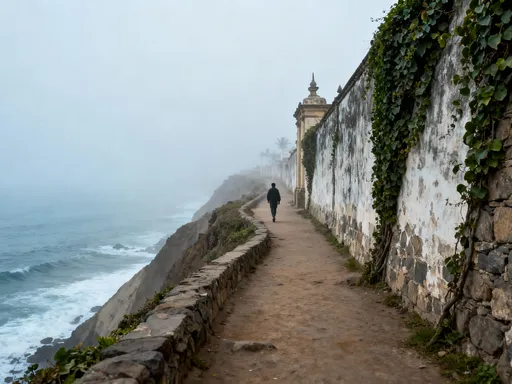
Kamakura’s landscape is not just a backdrop—it is an active participant in its culture. The town is cradled by mountains on three sides and faces the ocean to the south. This geography has shaped its spiritual identity, encouraging reflection, seclusion, and harmony with nature. One of the most profound experiences I had was walking the Daibutsu Trail, a forested path that connects several smaller temples between Kotoku-in and Hase. Unlike the main tourist routes, this trail sees few visitors. The path is narrow, lined with ferns, moss-covered stones, and weathered Jizo statues, each wearing a red bib left by mourners or well-wishers.
I walked alone, with only the sound of my footsteps and the occasional call of a bird. At one point, I stopped to watch a spider weaving its web between two branches, glistening with dew. Time slowed. There were no signs, no benches, no trash cans—just the path and the forest. This kind of unstructured, uncurated nature is rare in modern travel, where every view seems designed for Instagram. Here, beauty was not presented; it was discovered.
Another quiet sanctuary is Meigetsu-in, often called the “Temple of the Hydrangeas” for its stunning summer blooms. I visited in autumn, when the crowds had thinned. The temple’s rock garden, a composition of raked gravel and carefully placed stones, was empty. I sat on the wooden veranda and watched the patterns in the gravel—swirls that mimicked water, lines that suggested tides. A monk passed by, nodded, and continued his rounds. No one asked me to move. No one rushed me. The garden was not meant to be “seen” in a hurry; it was meant to be contemplated.
These spaces reflect a Japanese aesthetic known as ma—the value of negative space, of silence, of what is left unsaid. In Kamakura, nature is not tamed or decorated; it is respected as a teacher. The rustle of leaves, the drip of rain from eaves, the way light filters through bamboo—these are not distractions from culture. They are culture. To walk these paths is to practice mindfulness without even trying.
Navigating with Respect: Practical Tips for Meaningful Visits
To experience Kamakura as I did requires intention. It is possible to visit and see only the highlights, to take photos and leave without ever feeling the town’s deeper rhythm. But with small, mindful choices, travelers can move beyond tourism and into connection. One of the most important lessons I learned was to slow down. Instead of packing my days with temple visits, I chose one or two sites and spent hours at each. I arrived early, when the light was soft and the air cool, and stayed late, when the crowds had dispersed.
Dress matters. At temples and tea houses, I wore modest clothing—long pants, closed-toe shoes, nothing flashy. I removed my shoes before entering buildings, placed my bag neatly to the side, and avoided loud conversations. When photographing people or rituals, I always asked first. Often, the answer was no—and that was okay. There are moments meant to be lived, not recorded.
I also chose to travel locally. Instead of taxis or rental bikes, I used Kamakura’s bus system, which connects the main sites and residential areas. Riding the bus, I noticed details I would have missed otherwise: a grandmother handing her grandchild a rice ball, a student reading a novel between stops, a fisherman returning with his morning catch. I stayed in a minshuku, a family-run guesthouse in the hills. My host, a retired schoolteacher, served traditional breakfasts of grilled fish, miso soup, and pickled vegetables. Over meals, we shared stories—hers of growing up in postwar Kamakura, mine of life abroad. These conversations deepened my understanding more than any guidebook could.
Finally, I learned to embrace not knowing. I got lost more than once. I mispronounced names. I misunderstood customs. But instead of panicking, I smiled, bowed, and asked for help. Locals responded with kindness, not judgment. In Kamakura, mistakes are not failures; they are part of the journey.
Why This Kind of Travel Matters
In an age of fast tourism—where travelers race from one landmark to the next, chasing checklists and perfect photos—Kamakura offers a quiet rebellion. It reminds us that culture is not a product to be consumed, but a way of being to be experienced. The zazen session, the tea ceremony, the artisan’s workshop, the forest path—these are not attractions. They are invitations to slow down, to listen, to be present.
This kind of travel is not about luxury or exclusivity. It is accessible to anyone willing to pause, to observe, and to engage with humility. You do not need special skills or knowledge. You only need openness. And what you gain is not just memories, but transformation. I returned home with more than photographs. I carried a quieter mind, a deeper awareness of my own rhythms, and a renewed belief in the value of slowness.
Kamakura does not shout its wisdom. It whispers. It lives in the space between breaths, in the curve of a rake’s stroke, in the shared silence of a lantern-lit path. Its greatest lesson is this: culture is not found in monuments, but in moments—small, fleeting, human. When we slow down enough to notice them, we do not just see another way of life. We begin to live it, if only for a little while. And that, perhaps, is the most authentic journey of all.