Lost in the Stone and Sun: Slow Travel Through Sun City’s Soul
Have you ever walked through a place that feels like a dream, where every wall tells a story? Sun City, South Africa, is more than luxury and leisure—it’s a world of architectural wonder. Slowing down here revealed hidden details: Ndebele-inspired colors, ancient African motifs, and bold designs that blend nature with human imagination. This isn’t just a resort—it’s a living canvas. Amid the rustle of fever trees and the quiet hum of distant waterfalls, one begins to see beyond the postcard views. Sun City, often associated with glamour and entertainment, reveals a deeper narrative when approached with patience and curiosity. It invites travelers not merely to visit, but to observe, to feel, and to connect with a built environment that speaks in symbols, textures, and silent histories.
Arrival with Intention: Choosing Sun City for More Than the Glitz
Most arrive at Sun City expecting spectacle—sparkling pools, the flash of slot machines, the roar of the Valley of the Waves. These attractions are undeniably part of its identity, drawing thousands seeking leisure and escape. Yet, beneath the surface of entertainment lies a more contemplative dimension, one accessible only to those who come not just to play, but to perceive. Choosing to travel slowly through Sun City means arriving with intention, with eyes open to more than curated experiences. It means seeing the resort not as an isolated playground, but as a constructed landscape rich with cultural references and design philosophy.
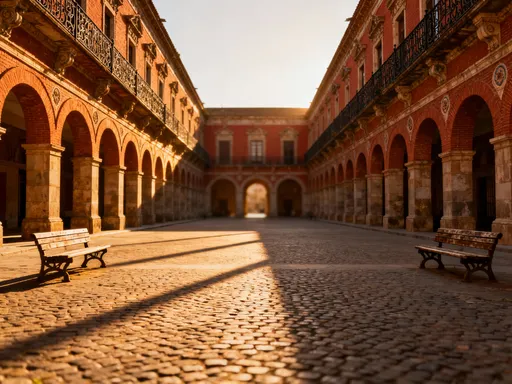
This shift in perspective transforms the journey. Instead of rushing from activity to activity, the mindful traveler pauses. They study the curve of a stone archway, the alignment of a pathway with the setting sun, or the way shadows fall across a mosaic courtyard at midday. Such details are not accidental. Every element—from the height of a gatepost to the placement of a carved leopard head—has been considered. The architecture does not shout; it whispers, revealing itself gradually to those willing to listen. This deliberate pace allows for a deeper appreciation of what Sun City truly offers: a synthesis of myth, memory, and material.
The contrast between Sun City’s public image and its architectural substance is striking. To many, it is synonymous with indulgence. But to the observant guest, it becomes a study in storytelling through space. The resort’s designers did not merely assemble buildings; they crafted an atmosphere, one that borrows from real traditions while inventing its own legend. By choosing to engage with this layer of meaning, visitors move beyond consumption and into connection. They begin to understand that even in a place of fantasy, authenticity can be found—not in historical accuracy, but in emotional resonance and artistic sincerity.
The Palace of the Lost City: Where Myth Meets Masonry
At the heart of Sun City stands the Palace of the Lost City, a structure so grand it seems conjured from legend. Rising from the dry Highveld landscape like a forgotten citadel reclaimed by time and jungle, it embodies the power of architectural imagination. Its towering sandstone walls, weathered to mimic centuries of erosion, are adorned with intricate carvings of elephants, crocodiles, and mythological serpents. Water cascades down stepped terraces, echoing the flow of ancient rivers, while palm-lined pools reflect the sky like mirrors of a lost kingdom. This is not a replica of any real African city, but rather a composite vision—a dream of what might have been.
The design draws inspiration from several Southern African traditions, including the stone architecture of Great Zimbabwe, the spiritual symbolism of Shona culture, and the oral histories of the Makgabeng plateau. Yet it does not attempt to reconstruct any single site. Instead, it uses exaggeration and theatricality to evoke a sense of awe. The massive columns, oversized reliefs, and labyrinthine corridors are not meant to be historically accurate, but emotionally resonant. They create a feeling of discovery, as though one has stumbled upon a city hidden for generations beneath the canopy.
This intentional dramatization is central to what makes the Palace so compelling. In themed architecture, exaggeration is not deception—it is a tool for engagement. By amplifying certain features—making the gates taller, the carvings deeper, the waterfalls louder—the designers tap into a universal human fascination with the monumental. It is a form of visual storytelling, where scale and detail work together to transport the visitor. The Palace does not pretend to be real, nor should it. Its value lies in its ability to inspire wonder, to make guests feel small in the presence of something greater than themselves.
Importantly, this fantasy is grounded in respect. While the Lost City is fictional, its motifs and materials pay homage to real cultures. The use of local stone, the incorporation of indigenous patterns, and the reverence for natural forms all reflect a desire to honor, not appropriate. The architects worked with cultural consultants to ensure that sacred symbols were not misused, and that the overall tone remained celebratory rather than exploitative. In this way, the Palace becomes more than a backdrop for luxury—it becomes a tribute to the enduring power of African creativity.
Walking the Walls: Patterns, Pigments, and Cultural Echoes
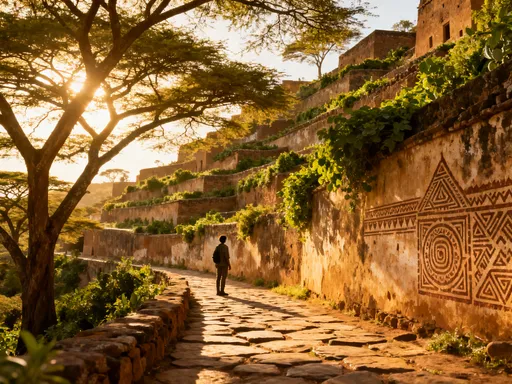
One of the most striking aspects of Sun City’s design is its use of color. As you walk the pathways between buildings, you begin to notice a recurring language of geometric forms—bold triangles, interlocking diamonds, zigzag borders—all rendered in vivid hues of ochre, cobalt, emerald, and ivory. These are not random decorations. They are deliberate references to the Ndebele people’s renowned tradition of mural painting, a living art form passed down through generations of women. In Ndebele culture, house painting is more than aesthetic; it is a form of communication, a way of expressing identity, status, and spiritual belief.
At Sun City, these patterns appear on gateposts, retaining walls, and the facades of guesthouses. They are scaled up, stylized, and integrated into the broader architectural scheme. While not exact reproductions, they carry the spirit of the original art. The use of symmetry, repetition, and symbolic color remains intact: green for fertility and growth, white for purity and clarity, red for energy and vitality. Even the placement of certain shapes—such as the upward-pointing triangle, often associated with aspiration—echoes traditional meanings. This thoughtful integration turns the entire resort into a silent dialogue between past and present.
Yet this homage raises important questions about representation and authenticity. When elements of a living culture are incorporated into a commercial space, where is the line between celebration and commodification? The answer lies in context and credit. At its best, Sun City’s use of Ndebele design acknowledges its source. Interpretive signs, cultural tours, and collaborations with local artists help ensure that the patterns are not just decorative, but educational. Guests are invited to learn about the women who pioneered this art, the meanings behind the motifs, and the challenges the Ndebele community faces today.
Slow travel allows for this deeper understanding. A hurried guest might see only bright colors. But one who lingers, who reads, who speaks with guides and artisans, begins to see the layers. They recognize that each stripe and angle is part of a larger story—one of resilience, creativity, and cultural continuity. In this way, the resort becomes not just a place of leisure, but a space of quiet learning, where beauty serves as a bridge to knowledge.
Nature as Co-Designer: How Landscape Shapes Architecture
Sun City does not dominate its environment; it emerges from it. Nestled in the Pilanesberg region, a former volcanic crater now home to rich biodiversity, the resort follows the natural contours of the land. Buildings rise along ridgelines, dip into valleys, and wrap around rocky outcrops. This integration is not merely aesthetic—it is philosophical. The architects understood that true luxury is not separation from nature, but harmony with it. As a result, the entire complex feels less like a construction and more like a continuation of the landscape.
Materials were chosen for their ability to age gracefully. Sandstone walls absorb the sun’s warmth by day and radiate it at night, mimicking the thermal regulation of natural rock formations. Thatched roofs, made from locally sourced grasses, blend with the golden hues of the surrounding bushveld. Even the color palette of the buildings—earthy reds, soft ochres, muted greens—echoes the seasonal shifts of the terrain. Over time, the structures weather and settle, their edges softened by wind and rain, their surfaces touched by lichen and vine. This natural aging process is not hidden; it is celebrated as part of the design.
Large glass walls and open-air corridors dissolve the boundary between inside and outside. From a lounge chair, you might watch a herd of impala pass just beyond the terrace. At breakfast, a malachite kingfisher could dart across a reflecting pool. These moments are not staged; they are made possible by intentional design choices that prioritize transparency and flow. The architecture does not block the view—it frames it.
Water, too, plays a functional and symbolic role. Beyond the resort’s famous man-made lake and water park, smaller streams and fountains are woven throughout the grounds. They cool the air, attract birds and insects, and provide a soothing auditory backdrop. Their placement often follows the natural drainage patterns of the land, ensuring minimal disruption to the ecosystem. In a region where water is precious, these features are designed to recirculate and conserve, blending beauty with sustainability. This deep respect for the environment ensures that Sun City feels not like an intrusion, but like a guest in its own setting.
Beyond the Palace: Hidden Architectural Gems in Lesser-Known Corners
While the Palace of the Lost City commands attention, some of Sun City’s most thoughtful design lies off the beaten path. The Cabanas, a collection of low-rise villas nestled along the banks of the Serpentine River, offer a quieter, more intimate experience. Here, the architecture shifts from grandeur to intimacy. Roofs are thatched, walls are plastered in soft clay tones, and courtyards are arranged to encourage conversation and relaxation. These spaces are designed not for spectacle, but for living.
Walking through these quieter zones, one notices a consistency of vision. Even the staff housing and service buildings follow the same design principles—natural materials, earth-toned finishes, and integration with vegetation. This level of detail is rare in large resorts, where back-of-house areas are often utilitarian and overlooked. At Sun City, aesthetic unity extends to every corner, reflecting a commitment to holistic design. The message is clear: beauty is not reserved for guests alone—it is a value applied to the entire environment.
Along the golf course, too, architecture speaks in subtler tones. The fairway villas feature louvered shutters, shaded verandas, and gardens that blur into the course itself. Their design prioritizes comfort and privacy, with layouts that maximize cross-ventilation and natural light. Unlike the theatricality of the Palace, these buildings whisper rather than shout. They are meant to be lived in, not just admired. This contrast between the monumental and the domestic enriches the overall experience, offering a fuller picture of what thoughtful resort design can achieve.
Exploring these lesser-known areas also reveals the importance of rhythm in architectural experience. Just as music needs both crescendo and silence, a built environment benefits from variation in pace and intensity. The grandeur of the Palace is more meaningful when balanced by the calm of a riverside cabana. The contrast invites reflection, allowing guests to move between awe and ease, between stimulation and rest. This ebb and flow is a hallmark of slow travel, where the journey is not about seeing everything, but about feeling deeply in a few places.
Time as a Building Material: How Staying Longer Reveals More
Architecture is often judged at first glance—its façade, its scale, its immediate impact. But like a good book, its true depth unfolds over time. In the first hours at Sun City, one sees the postcard views: the grand entrance, the shimmering pools, the dramatic waterfalls. By the second day, details begin to emerge—the way morning light gilds the carvings on a column, the sound of doves nesting in a stone crevice, the faint patina on a bronze door handle worn smooth by countless hands.
Staying longer allows the built environment to reveal its life. You notice how staff sweep leaves from mosaic pathways with practiced care, how gardeners prune vines to frame a view just so, how shadows shift across a mural as the sun moves. These are not flaws in the design, but signs of its vitality. They show that the architecture is not frozen in perfection, but alive, changing, interacting with those who inhabit it. This dynamic relationship between people and place is at the heart of meaningful design.
Seasonal changes further enrich the experience. In the dry winter months, the landscape turns golden, and the stone buildings seem to glow. During the summer rains, the gardens burst into green, and waterfalls swell to full voice. The same courtyard can feel entirely different in mist or in sunlight. A slow traveler learns to appreciate these shifts, understanding that a place is not a static image, but a living system. The architecture, in turn, becomes a companion in this unfolding, a constant presence that changes with the light, the weather, and the rhythm of daily life.
This deepening connection is perhaps the greatest gift of slow travel. It moves us beyond consumption and into contemplation. We stop seeing the resort as a product and start seeing it as a place—a space shaped by human hands, natural forces, and cultural memory. And in that shift, we begin to see ourselves differently, not as passive visitors, but as participants in a shared story.
Reimagining Resort Travel: Can Beauty and Meaning Coexist?
Sun City challenges a common assumption: that luxury resorts are inherently superficial. In a world where many vacation destinations prioritize convenience over character, Sun City stands apart. It proves that even in a commercial setting, architecture can carry weight, memory, and meaning. The Lost City may be fictional, but the emotions it evokes are real. The Ndebele patterns may be stylized, but they honor a living tradition. The landscape may be curated, but it respects the integrity of the natural world.
The success of this balance lies in attention to detail and a commitment to authenticity. Sun City does not pretend to be a museum or a sacred site. It is a resort, first and foremost. But within that identity, it carves out space for depth. It invites guests to look closer, to ask questions, to feel the texture of a carved wall or the coolness of shaded stone. In doing so, it redefines what a luxury experience can be—not just comfort and service, but connection and understanding.
For the modern traveler, especially those seeking meaningful experiences without sacrificing comfort, Sun City offers a compelling model. It shows that beauty and purpose need not be mutually exclusive. A place can be both enchanting and respectful, both imaginative and grounded. The key is intention—on the part of designers, operators, and visitors alike. When we approach a destination with curiosity and care, we unlock its deeper layers. We move beyond the surface and into the soul of a place.
Ultimately, Sun City reminds us that architecture is more than shelter. It is storytelling. It is memory. It is a conversation between people and place, past and present, nature and culture. To walk its paths slowly is to listen to that conversation. And in the quiet moments—when the sun slants across a courtyard, when a breeze stirs the reeds, when a shadow falls just so—we hear the walls speak. They tell of creativity, of resilience, of the enduring human desire to build something beautiful. And if we take the time to listen, they just might change the way we travel forever.