You Gotta See Sofia From These Spots – Mind-Blowing Views Await
Sofia isn’t just Bulgaria’s capital — it’s a city where mountains meet history and hidden viewpoints reveal its soul. I never expected such breathtaking panoramas from a place often overlooked in European travel. From church rooftops to forest trails, each vantage point tells a story. Whether you're chasing sunrise over Vitosha or a quiet moment above the skyline, these spots transform how you see the city. Let me show you the angles most travelers miss — real, raw, and absolutely unforgettable.
Why Viewpoints Change Your Travel Experience
Elevation does more than offer a wider field of vision — it shifts your entire relationship with a destination. When you rise above the streets, the rhythm of a city becomes visible. You notice patterns: how tram lines trace green corridors through neighborhoods, how rooftops cluster like villages, and how light dances across valleys at golden hour. This shift in perspective fosters a deeper emotional connection. The sense of discovery, calm, and awe that comes from standing above a sprawling urban landscape is unmatched in travel.
For travelers, viewpoints are more than photo opportunities — they are moments of clarity. From above, the chaos of daily life simplifies into something harmonious. You gain a sense of scale, both of the city and your place within it. Studies in environmental psychology suggest that expansive views can reduce stress and increase feelings of freedom. When you see a city laid out beneath you, it’s not just sightseeing — it’s a mental reset. That’s why so many travelers describe panoramic moments as transformative, even spiritual.
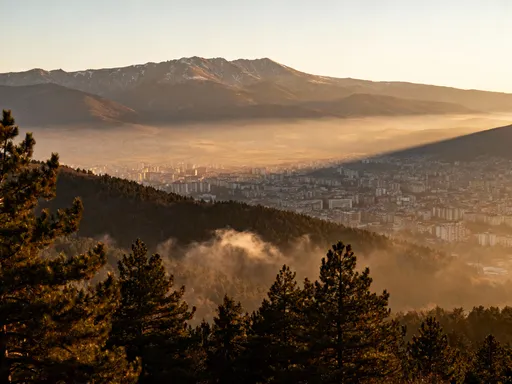
Sofia, in particular, rewards those who seek high ground. Nestled at the foot of Vitosha Mountain, it’s one of Europe’s few capitals where nature and urban life exist in constant dialogue. The mountain isn’t just a backdrop — it’s a presence, shaping the city’s climate, culture, and skyline. From almost any elevated spot in Sofia, you can see this balance: centuries-old churches beside modern buildings, tree-lined avenues climbing into forested slopes, and residential neighborhoods stepping up the hillsides. This blend of green and gray, ancient and contemporary, makes Sofia’s viewpoints uniquely layered.
What sets Sofia apart is accessibility. Unlike cities where panoramic views require expensive observation decks or long hikes, Sofia offers rewarding vistas within minutes of public transport stops or quiet side streets. Many of these spots are known to locals but overlooked by guidebooks. That means you can experience moments of solitude even in a capital city of over 1.2 million people. Whether you're an early riser chasing sunrise or a sunset chaser with a camera, Sofia’s elevated perspectives invite you to slow down, look closely, and see the city with fresh eyes.
St. Alexander Nevsky Cathedral Rooftop View (Central Vista)
One of the most surprising and legally accessible elevated views in Sofia comes from within its most iconic landmark — the St. Alexander Nevsky Cathedral. While most visitors admire the cathedral’s grand dome and golden mosaics from ground level, few realize that guided tours occasionally offer access to upper viewing platforms. These tours, led by cathedral staff or authorized cultural guides, take small groups through narrow staircases to vantage points that overlook central Sofia like a living map.
From this central vista, the city unfolds in every direction. To the north, you can trace the winding path of yellow trams through the green heart of Borisova Gradina Park. To the east, the domes of the Russian Church and the Ministry of Defense building catch the morning light. Southward, the flat rooftops of the city center give way to the first ridges of Vitosha Mountain, its silhouette shifting with the weather. On clear days, you might even spot the peak of Cherni Vrah, the highest point on the mountain, nearly 2,300 meters above sea level.
The view is especially powerful at sunrise, when the city is still quiet and the golden dome of the cathedral glows against a soft sky. This is also the best time to avoid crowds, as tours are less frequent and the cathedral is at its most serene. Visitors should book in advance through official cultural tour providers or inquire at the cathedral’s information desk. While access is not daily, these rooftop experiences are carefully managed to preserve the historic structure and ensure safety.
What makes this viewpoint unique is its blend of architectural intimacy and urban expanse. You’re not just looking at Sofia — you’re standing on one of its most symbolic structures. The contrast between the cathedral’s ornate interior and the modern city stretching beyond is striking. It’s a reminder that Sofia’s identity is built on layers — religious, political, cultural — all visible from this single, elevated moment. For photographers, historians, and curious travelers alike, the Nevsky rooftop offers a rare chance to see the city’s heart from its most recognizable crown.
Vitosha Mountain – Aleko Hut Area for City Panoramas
For a more natural vantage point, the slopes of Vitosha Mountain provide some of the most sweeping views of Sofia. The area around Aleko Hut, a mountain lodge accessible by public bus and a short hike, is particularly rewarding. Located at about 1,600 meters above sea level, this spot offers a panoramic canvas of the entire Sofia Valley, with the city spreading out like a patchwork of light and shadow beneath the mountain’s southern face.
The journey begins with bus number 66 from the Knyazhevo district, which climbs steadily into the forested foothills. After a 30-minute ride, you reach the last stop near the chairlift station. From there, a well-maintained trail leads to Aleko Hut in about 20 minutes. The path is family-friendly, with gentle inclines and wooden markers. Along the way, the scent of pine fills the air, and the sounds of the city fade into birdsong and wind. This transition from urban to alpine is part of what makes the experience so powerful.
Once at the Aleko Hut area, several open viewpoints face north toward Sofia. At dusk, the city comes alive with lights — streetlamps tracing road curves, illuminated buildings standing out like beacons, and car headlights forming rivers of motion. The effect is magical, especially after fresh snow, when the valley glows under a soft white blanket. On clear nights, the city’s light pollution creates a warm halo against the dark mountain, a contrast that feels both comforting and awe-inspiring.
Many locals come here for weekend hikes or evening escapes, but the space is large enough to find solitude. Benches near the hut offer places to rest and absorb the view. Some visitors bring thermoses of tea or coffee, turning the moment into a quiet ritual. The elevation ensures clean, cool air, making deep breathing feel restorative. For those seeking a longer adventure, trails extend deeper into Vitosha’s alpine zones, but even a short visit to Aleko Hut delivers one of Sofia’s most unforgettable cityscapes — natural, expansive, and deeply peaceful.
Zlatnite Mostove (The Golden Bridges) – Nature’s Overlook
Further into Vitosha Mountain, the natural rock formations known as Zlatnite Mostove — or The Golden Bridges — offer a geological wonder that doubles as a dramatic viewing platform. This site, formed by centuries of erosion and freeze-thaw cycles, features massive stone bridges and pillars that rise above the treeline. While often visited for their otherworldly appearance, few travelers realize that the higher sections of the trail provide stunning overlooks of Sofia’s western sprawl.
The trail to Zlatnite Mostove begins at a parking area accessible by car or seasonal shuttle. From the trailhead, a moderately challenging 45-minute climb leads through mixed forest, with boardwalks in place to protect the fragile ecosystem. As you ascend, the trees thin, revealing glimpses of the valley below. By the time you reach the main rock formations, the city stretches out in the distance, framed by ancient stone and misty woodland. On hazy mornings, the view feels dreamlike — Sofia appears half-hidden, as if emerging from a fairy tale.
What makes this viewpoint special is its sense of discovery. Unlike formal observation decks, Zlatnite Mostove feels untouched, raw. You can sit on a sun-warmed boulder and watch clouds drift over the city, or photograph the interplay of light and shadow across the urban grid. The name “Golden Bridges” comes from the color of the rocks at sunset, when the stone glows amber and the sky turns pink. It’s a moment of pure natural theater.
Because the trail is less frequented than other mountain paths, it offers a sense of solitude rare so close to a capital city. Families with older children, hikers, and nature lovers all find something here — geological intrigue, physical challenge, and visual reward. Park rangers occasionally patrol the area to ensure visitor safety and environmental protection. Dogs on leashes are allowed, making it a favorite among local pet owners. For travelers seeking a blend of adventure and beauty, Zlatnite Mostove delivers a panoramic experience that feels both grand and intimate.
Boyana Church Grounds – Elevated Serenity
Nestled in the Boyana district at the foot of Vitosha, the UNESCO-listed Boyana Church is famed for its 13th-century frescoes — some of the finest medieval art in Eastern Europe. Yet, few visitors notice the quiet overlook just behind the church grounds. A small, unmarked path leads to a grassy terrace that opens onto a breathtaking view of Vitosha’s northern face and the tree-lined neighborhoods below.
This vantage point offers a rare blend of cultural and natural beauty. After spending time inside the church, where light filters through small windows onto centuries-old paintings, stepping outside to this overlook feels like a revelation. The mountain fills the horizon, its rocky ridges and forested slopes changing color with the seasons. In spring, wildflowers dot the meadow; in autumn, the trees turn gold and crimson. Below, the upscale residential areas of Boyana and Dragalevtsi climb the hills, their villas half-hidden among the foliage.
The view is unobstructed and peaceful, a contrast to the museum-like atmosphere of the church interior. Benches are placed discreetly, inviting quiet reflection. Because this spot isn’t marked on tourist maps, it remains under-visited. You’re more likely to encounter a local artist sketching the scene or a couple enjoying a private moment than a tour group. This makes it ideal for travelers who value authenticity and stillness.
Visiting Boyana Church requires advance booking due to conservation efforts, but the grounds are accessible during opening hours. The combination of world-class art and hidden panorama makes this one of Sofia’s most layered experiences. It’s a place where history, nature, and personal reflection converge — a reminder that the best views often come not from climbing the highest peak, but from pausing in the right place at the right time.
Park Vladayska – Hidden Urban Escape with a View
For a more accessible, neighborhood-based viewpoint, Park Vladayska offers a cherished local escape with a western-facing panorama. Tucked into a quiet residential area on Sofia’s eastern slopes, this terraced park is a favorite among residents but rarely appears in travel guides. Reached via Line 1 of the metro to Mladost 1, followed by a 10-minute walk uphill, the park rewards the short climb with open spaces, flower gardens, and benches positioned for optimal sunset viewing.
The park’s design takes full advantage of its elevation. Terraces step down the hillside, each offering a slightly different angle of the city and the mountains beyond. The highest level provides the clearest view, where you can watch the sun dip behind Vitosha, painting the sky in shades of orange and purple. As daylight fades, the city lights begin to sparkle, starting in the central districts and spreading outward. It’s a gentle, unhurried spectacle — the kind that invites conversation, reading, or simply sitting in silence.
What makes Park Vladayska special is its authenticity. There are no ticket booths, no guided tours, no souvenir stands. Just locals walking dogs, grandparents pushing strollers, and teenagers sharing snacks on benches. The atmosphere is warm and unpretentious. In spring and summer, climbing roses bloom along the pathways, filling the air with fragrance. Public restrooms and trash bins are maintained, but facilities are minimal — this is a place for simplicity, not spectacle.
Because it’s off the tourist trail, Park Vladayska offers a rare chance to experience Sofia as residents do. It’s the kind of place where time slows down, where you can feel the rhythm of daily life without the pressure to perform or photograph. For travelers seeking connection over checklist tourism, this quiet park delivers one of the city’s most genuine views — not just of the skyline, but of its soul.
Roof Bars and Terraces in the City Center
While Sofia’s rooftop culture is still developing compared to other European capitals, a few authorized venues now offer legal and safe access to elevated cityscapes. These spaces combine comfort with panorama, allowing visitors to enjoy a coffee, cocktail, or meal while taking in 360-degree views. The most established is Sky Bar & Restaurant, located on the top floor of the Poduyane Business Center, just a short taxi ride from the city center.
Sky Bar features a spacious indoor lounge and an outdoor terrace with unobstructed views in all directions. To the south, Vitosha dominates the horizon; to the north, the city’s grid stretches toward the hills. At night, the illuminated towers of the business district create a modern skyline, while residential areas glow with warmer tones. The bar maintains a relaxed, upscale atmosphere — suitable for couples, small groups, or solo visitors looking for a sophisticated pause.
It’s important to emphasize that only authorized venues should be used for rooftop access. Sofia has strict regulations regarding building safety and public access, and trespassing on private roofs is both illegal and dangerous. Unlike some cities where urban exploration is common, Sofia prioritizes visitor safety and property rights. Travelers are encouraged to enjoy the views responsibly — through official tours, cultural sites, or licensed establishments like Sky Bar.
The growing interest in rooftop experiences reflects a broader trend: travelers want more than just sights — they want moments. Places like Sky Bar cater to that desire, offering comfort, service, and a curated view. While they may lack the rawness of a mountain trail or hidden park, they provide an accessible alternative for those with limited mobility or time. As Sofia continues to develop, more such spaces may emerge — but for now, Sky Bar remains a reliable, legal, and enjoyable option for seeing the city from above.
Conclusion: Seeing Sofia Differently
Each of these viewpoints offers more than just a pretty picture — they offer a new way of understanding Sofia. From the sacred heights of St. Alexander Nevsky to the quiet bench in Park Vladayska, every vantage point reveals a different facet of the city’s character. What connects them is a sense of elevation — not just physical, but emotional and perceptual. When you rise above the street level, you gain clarity, calm, and a deeper appreciation for the intricate balance between nature and city, past and present.
The best views in Sofia are not always the most famous. They are often found by wandering, by asking locals, by taking the path less crowded. They require a little effort, a little curiosity, and a willingness to look up. But the reward is immense — a moment of awe, a memory that lingers, a photograph that captures more than scenery, but feeling.
As you plan your visit, remember that travel is not just about where you go, but how you see. Sofia invites you to slow down, to explore with respect, and to discover its soul from above. Whether you’re standing on a mountain ridge, a church rooftop, or a quiet park bench, you’re not just observing the city — you’re becoming part of its story. So pack your camera, lace up your shoes, and look for the angles others miss. The real magic of Sofia isn’t just in its landmarks — it’s in the way it reveals itself, one breathtaking view at a time.