You Won’t Believe These Madrid Landmarks Look Like Postcards Come to Life
Madrid isn’t just Spain’s vibrant heart—it’s a visual feast waiting to be captured. When I wandered through its sunlit plazas and grand boulevards, every turn felt like stepping into an Instagram dream. Iconic buildings don’t just stand tall here—they perform. From golden facades glowing at golden hour to ornate rooftops that look painted by artists, Madrid’s landmarks blend history and beauty in ways you have to see to believe. This is architecture that doesn’t just impress—it connects. Every plaza, palace, and dome tells a story not only of kings and artists but of daily life elevated into art. For women who cherish beauty, culture, and meaningful travel, Madrid offers a rare gift: a city where grandeur feels intimate, and history walks beside you with quiet confidence.
The Grand Stage: Plaza Mayor and Its Timeless Vibe
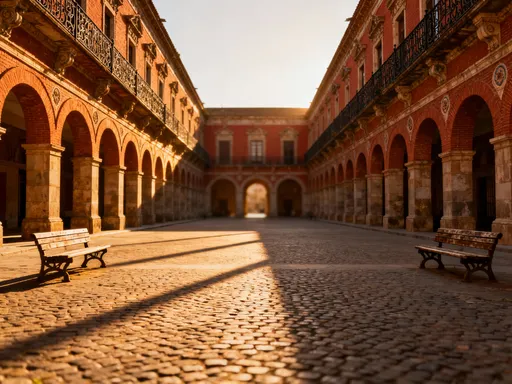
At the heart of Madrid’s old town lies Plaza Mayor, a majestic square that has served as the city’s communal living room for over four centuries. Enclosed by three-story red-brick buildings with uniform balconies and wrought-iron railings, this grand plaza radiates harmony and elegance. Designed in the early 17th century under Philip III, its symmetrical layout creates a natural frame for photography, making it one of the most recognizable urban spaces in Spain. The arcaded ground floor houses cafés, restaurants, and souvenir shops, where locals and visitors alike gather beneath striped awnings, sipping coffee as horse-drawn carriages occasionally clip-clop across the cobblestones.
What makes Plaza Mayor truly special is its ability to feel both historic and alive. Once the site of bullfights, royal ceremonies, and public executions, it now hosts art exhibitions, holiday markets, and open-air concerts—yet its grandeur remains untouched. The central statue of King Philip III on horseback anchors the space, while the surrounding architecture, restored after several fires, preserves its original Renaissance spirit. For photographers, the golden hours just after sunrise or before sunset bathe the honey-toned brickwork in a warm glow, minimizing harsh shadows and enhancing texture. Early morning visits offer the added benefit of fewer crowds, allowing for unobstructed shots of the full square.
Nearby cafés such as Café de la Opera or El Sur provide perfect vantage points from their terraces, where a leisurely breakfast or afternoon tea can be paired with uninterrupted views. Sitting here, watching light shift across the façades, one begins to understand how urban design can nurture community and beauty simultaneously. Plaza Mayor isn’t merely a stop on a sightseeing list—it’s a living example of how public spaces can inspire connection, reflection, and quiet joy. For women who appreciate tradition with a modern heartbeat, this plaza embodies the soul of Madrid.
Royal Drama: Inside the Royal Palace of Madrid
Just a short walk from Plaza Mayor stands the Royal Palace of Madrid, a monumental testament to Spain’s regal past. Though no longer used as a residence by the royal family, it remains the official palace and a dazzling showcase of Baroque and neoclassical architecture. With over 3,000 rooms—only about 50 of which are open to the public—it ranks among the largest palaces in Europe. Visitors are immediately struck by its sheer scale and ornate detail: limestone façades carved with imperial symbols, grand staircases lined with marble columns, and interiors adorned with frescoes, chandeliers, and gilded woodwork that shimmer under soft lighting.
One of the most photographed areas is the Royal Armory, home to an exceptional collection of historic weapons, armor, and royal carriages. The suits of armor, meticulously preserved, stand like silent sentinels from another era, while ceremonial swords and tournament lances tell stories of power, pageantry, and craftsmanship. Equally breathtaking is the Gasparini Hall, where a sweeping double staircase ascends beneath a vaulted ceiling painted with mythological scenes. Sunlight filters through tall windows, illuminating intricate stucco work and adding depth to every photograph taken here.
For those seeking the best photo opportunities, arriving at opening time (typically 10 a.m.) ensures fewer crowds and softer indoor lighting. While self-guided tours allow flexibility, a guided audio tour enhances understanding of the palace’s evolution—from its origins on the site of a 9th-century Muslim fortress to its reconstruction after a devastating fire in 1734. The Sabatini Gardens, located behind the palace, offer a peaceful contrast with their geometric hedges, fountains, and symmetrical pathways—ideal for quiet reflection or framing the palace in wide-angle shots. These manicured grounds provide a sense of balance between nature and architecture, a theme that echoes throughout Madrid’s design philosophy.
The Royal Palace is more than a monument to monarchy; it’s a celebration of artistic mastery across centuries. Every tapestry, chandelier, and doorway reflects the labor of countless artisans whose names may be lost to time but whose legacy endures. For women who value heritage and beauty, walking through these halls feels like stepping into a carefully preserved dream—a reminder that elegance, when nurtured, can transcend generations.
Art Meets Architecture: The Thyssen-Bornemisza and Its Elegant Facade
Nestled along the Paseo del Prado, one of Madrid’s most prestigious avenues, the Museo Nacional Thyssen-Bornemisza occupies a neoclassical palace that rivals its world-class art collection in visual splendor. Originally built in the late 19th century as a mansion for the Aguilar family, the building was later transformed to house part of Baron Heinrich Thyssen-Bornemisza’s private art collection before being acquired by the Spanish state. Its limestone façade, adorned with pilasters, pediments, and sculptural reliefs, exudes understated refinement, blending seamlessly with the surrounding cultural institutions—the Prado Museum and Reina Sofía—forming what is known as the “Golden Triangle of Art.”
What sets the Thyssen-Bornemisza apart architecturally is its harmonious proportion and the way natural light interacts with its surfaces. During midday, sunlight glances off the pale stone, highlighting delicate carvings without creating harsh contrasts. The central portico, framed by Corinthian columns, invites visitors into a spacious atrium where daylight pours through a glass ceiling, illuminating the marble floors below. This interplay of light and material makes the museum not only a destination for art lovers but also a favorite among photographers drawn to clean lines and classical symmetry.
Unlike many modern museums that prioritize function over form, the Thyssen-Bornemisza maintains a residential intimacy despite its grandeur. Its galleries unfold like the private rooms of a noble home, allowing visitors to experience masterpieces—from Renaissance portraits to Impressionist landscapes—in an atmosphere of quiet elegance. The surrounding Paseo del Prado enhances this sense of cohesion, with tree-lined walkways, ornamental fountains, and sculptural monuments creating a unified cultural landscape. For women who appreciate the subtle fusion of art, history, and design, this museum offers a deeply satisfying experience—one where beauty is not imposed but naturally unfolds.
Visiting in the late morning or early afternoon provides optimal lighting for exterior photography, especially when capturing the façade against a clear blue sky. The nearby fountain of Neptune adds a dynamic foreground element, particularly when its waters sparkle in the sun. Whether viewed up close or from across the boulevard, the Thyssen-Bornemisza stands as a model of architectural grace—a reminder that true luxury often lies in restraint and balance.
A Cathedral in the Sky: San Francisco el Grande and Its Dome
Just south of the Royal Palace, hidden in a quieter corner of central Madrid, lies the Basílica de San Francisco el Grande—a Baroque masterpiece often overlooked by hurried tourists. Yet those who take the time to enter are rewarded with one of the city’s most awe-inspiring interiors. The basilica’s most striking feature is its massive dome, rising 58 meters high and adorned with a fresco of the Apotheosis of Saint Francis by Francisco Bayeu, brother-in-law of Francisco Goya. As light filters through windows at the base of the cupola, it bathes the nave in a soft, ethereal glow, enhancing the sense of verticality and divine presence.
Exterior views reveal a relatively modest façade compared to other Madrid landmarks, but this simplicity belies the richness within. The church’s origins date back to the 18th century, built on the site of a former Franciscan monastery. Its design follows the Latin cross plan, with a wide transept and radiating chapels filled with sculptures, altarpieces, and religious paintings. The cloister, now part of the Royal Academy of Fine Arts of San Fernando, is a serene retreat with arched walkways surrounding a central garden. Here, silence prevails, broken only by the rustle of leaves or distant footsteps—an oasis of calm amid the urban rhythm.
Photographers will find the interior dome particularly compelling, especially when shooting upward from the center of the nave. A wide-angle lens captures the full scope of the fresco, while a polarizing filter can help reduce glare from the overhead light. Because the basilica is less frequented than major attractions, it offers rare opportunities for contemplative exploration and unobstructed compositions. Morning visits ensure the best natural illumination, as sunlight moves gradually across the interior surfaces.
San Francisco el Grande represents a different kind of beauty—one rooted in devotion, quiet craftsmanship, and spiritual serenity. For women who seek depth beyond the obvious, this sacred space offers a powerful reminder that some of the most meaningful experiences come not from grand announcements but from stillness, light, and the courage to look upward.
Modern Majesty: The Reina Sofía’s Subtle Statement
Contrasting the classical elegance of the Thyssen-Bornemisza and Prado, the Museo Nacional Centro de Arte Reina Sofía makes a bold yet restrained architectural statement. Originally constructed in the 18th century as a hospital, the building underwent a major expansion in the late 20th century with the addition of a sleek, minimalist wing designed by French architect Jean Nouvel. This modern extension, completed in 2005, features glass curtain walls, geometric forms, and a striking red steel staircase that floats like a ribbon through the atrium. The juxtaposition of old and new creates a dynamic dialogue between eras, symbolizing Madrid’s ability to honor tradition while embracing innovation.
The museum is best known as the home of Pablo Picasso’s iconic painting *Guernica*, but its architecture deserves equal attention. The glass façade reflects the sky and surrounding trees, changing appearance with the weather and time of day. On overcast mornings, the building appears soft and translucent; at sunset, it glows with warm hues, mirroring the colors of nearby rooftops. The rooftop terrace, accessible to visitors, offers panoramic views of the city skyline, including glimpses of the Retiro Park and the Almudena Cathedral—a perfect spot for capturing Madrid’s layered landscape.
Photography enthusiasts will appreciate the sharp lines, reflective surfaces, and dramatic shadows created by the modern wing. Shooting from low angles emphasizes the verticality of the structure, while long exposures during twilight can capture the gradual shift from daylight to artificial illumination. The nearby Sabatini Gardens, with their symmetrical hedges and fountains, provide a classical counterpoint that can be used to frame the Reina Sofía’s contemporary silhouette—an elegant composition of old and new.
For women who value both history and progress, the Reina Sofía embodies a balanced vision of cultural evolution. It does not erase the past but builds upon it, creating space for dialogue, reflection, and creative courage. In a world that often demands choosing between tradition and change, this museum quietly suggests that the most powerful path lies in integration.
Skyline Icons: The Four Towers and Madrid’s Urban Edge
On the western edge of the city rises the Cuatro Torres Business Area (CTBA), a cluster of Spain’s tallest skyscrapers that redefine Madrid’s skyline. Comprising the Torre Caja Madrid (now Torre Bankia), Torre de Cristal, Torre PwC, and Torre Espacio, these towers soar between 224 and 249 meters, their glass and steel façades reflecting clouds, sunlight, and the changing colors of the sky. Designed by internationally acclaimed architects including Norman Foster and Henry Cobb, the complex represents Madrid’s emergence as a modern European capital without sacrificing aesthetic coherence.
The towers are particularly striking at sunset, when their mirrored surfaces catch the last golden rays, creating a radiant effect visible from miles away. For panoramic photography, Parque del Oeste (West Park) offers one of the best vantage points, especially from the Rosaleda—Madrid’s renowned rose garden. From here, the towers rise dramatically in the distance, framed by blooming flowers and leafy trees, blending urban ambition with natural beauty. Another excellent location is the Temple of Debod, an ancient Egyptian temple gifted to Spain, which provides a unique foreground during twilight shoots when its silhouette contrasts against the illuminated skyline.
While the CTBA is primarily a corporate district, it also includes landscaped plazas, walking paths, and public art installations, making it accessible and inviting. Visitors can tour the observation deck of Torre Caja Madrid (when open), enjoying 360-degree views that stretch across the entire metropolitan area. Even from the ground, walking among the towers allows one to appreciate their scale and engineering precision—the way wind flows between them, how light dances across their surfaces, and how they anchor the city’s modern identity.
For women who admire ambition, resilience, and forward-thinking design, the Four Towers stand as symbols of possibility. They do not overshadow the past but complement it, proving that a city can grow taller without losing its soul. In their reflective glass, one sees not just the sky—but the future, shimmering with potential.
Hidden Gems with Grandeur: Lesser-Known Buildings That Shine
Beyond the famous plazas and museums, Madrid is dotted with architectural treasures that may not dominate guidebooks but captivate those who discover them. Among the most photogenic is the Palacio de Cibeles, formerly the city’s post office headquarters and now a cultural center and observation deck. Its early 20th-century façade, blending Neo-Renaissance and regional styles, features ornate stonework, sculpted figures, and a central clock tower that glows in vibrant colors at night. Perched above a sweeping staircase, it commands attention at the intersection of several major avenues, especially when illuminated after dark.
Another rising favorite among locals and photographers is the Edificio Metrópolis, located at the intersection of Gran Vía and Calle de Alcalá. Topped with a striking winged victory statue holding a laurel wreath and globe, this early 20th-century building combines French academicism with Spanish ornamentation. The façade is richly detailed with columns, arches, and allegorical sculptures representing progress, industry, and commerce. At golden hour, the warm light enhances the golden accents on the dome, creating a regal effect that feels both timeless and cinematic.
For standout photos, timing and angles are essential. The Edificio Metrópolis is best captured from across the street during late afternoon, when the sun highlights its eastern façade. The Palacio de Cibeles shines brightest during blue hour, when its illuminated windows and façade contrast beautifully with the darkening sky. Both buildings are easily accessible by public transit and situated in walkable areas, making them perfect additions to a relaxed city tour.
These lesser-known landmarks remind us that beauty often lies just beyond the obvious. They invite slower exploration, curious glances, and personal discovery—qualities that resonate deeply with women who travel not just to check destinations off a list, but to feel, absorb, and remember. In Madrid, even the side streets whisper stories of artistry and pride.
Madrid’s landmark buildings aren’t just monuments—they’re storytellers in stone, glass, and gold. Whether drenched in morning light or glowing under city skies, they invite us to look closer, shoot wisely, and feel the pulse of a city where every façade has flair. This is more than sightseeing—it’s visual storytelling at its finest. From the harmonious symmetry of Plaza Mayor to the reflective ambition of the Four Towers, Madrid reveals itself layer by layer, not through loud declarations but through quiet details, changing light, and enduring craftsmanship. For women who seek meaningful travel, rich culture, and authentic beauty, Madrid offers a journey that nourishes both the eye and the spirit. It reminds us that true elegance is not about being seen, but about seeing deeply—and in doing so, finding pieces of ourselves reflected in the world’s most graceful corners.