This Is What Happens When You Check In to Gozo’s Hidden Public Spaces
You know that feeling when a place just gets you? Gozo, Malta’s quieter sister island, hit me like a sunlit wave the second I stepped off the ferry. It wasn’t just the golden limestone or the Mediterranean breeze—it was how the island lives in its public spaces. From village squares humming with morning life to cliffside paths shaped by centuries, Gozo’s soul spills into the open. This isn’t just travel—it’s belonging. And I couldn’t wait to check in. Here, public spaces are not afterthoughts or decorative add-ons. They are the living framework of daily life, carefully shaped by time, tradition, and a deep respect for community. Unlike many tourist destinations where commercialization narrows access or funnels visitors into curated experiences, Gozo opens its arms wide. Its plazas, pathways, and promenades welcome everyone—locals and guests alike—into a rhythm that feels both ancient and refreshingly immediate. In an age where authenticity is often staged, Gozo offers something rare: a place where life unfolds naturally in shared spaces, and where simply being present becomes a form of connection.
First Impressions: Stepping Into Gozo’s Rhythm
The journey to Gozo begins with a twelve-minute ferry ride from Malta, a short crossing that feels like passing through a subtle but powerful threshold. As the engine slows and the vessel docks at Mġarr Harbour, the pace of life visibly shifts. There are no blaring horns, no rushing crowds, no towering hotels blocking the sky. Instead, the air carries the scent of wild thyme and sea salt, and the only urgency seems to come from seagulls circling above. This immediate sense of calm is not accidental—it is woven into the island’s public design. Gozo’s infrastructure prioritizes people over vehicles, movement over congestion, and quiet over noise. The harbor area itself is modest: a small terminal, a few benches, a local bus stop, and a walking path that leads gently uphill toward the countryside. There are no souvenir stalls or taxi touts, just a straightforward invitation to begin walking.
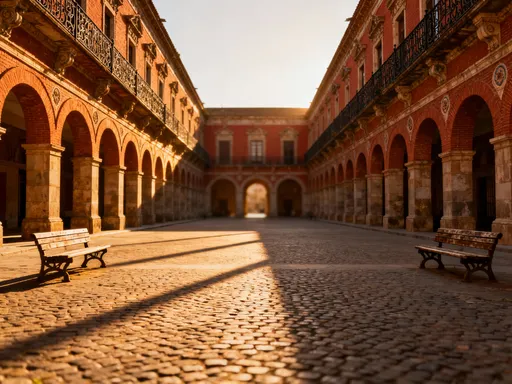
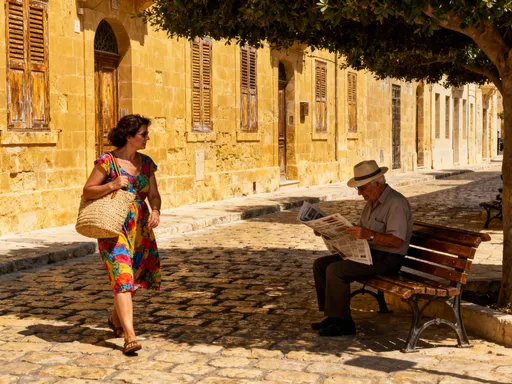
From the harbor, one can take a bus or rent a car, but the true introduction to Gozo happens on foot. The roads near the coast are lined with low stone walls, dotted with caper bushes and prickly pears, and occasionally opened up into small communal clearings where neighbors might stop to chat. These are not formal parks, yet they function as shared spaces—unofficial gathering points where community life begins. As you move inland, the island’s central town, Victoria—also known locally as Rabat—emerges as a natural focal point. Its wide streets, shaded squares, and open market areas reflect a long-standing tradition of public interaction. Unlike the compact bustle of Valletta or the tourist-heavy strips of Sliema, Victoria feels lived-in and unperformed. The public spaces here are not preserved behind glass; they are used, worn, and cherished. Benches are occupied by elders reading newspapers, children play near fountains, and shopkeepers sweep their doorsteps into the street, extending their presence into the communal realm. This seamless blending of private enterprise and public life is one of Gozo’s quiet strengths.
What makes this rhythm so striking is its consistency. In many destinations, the charm fades once you step off the main square. But in Gozo, the sense of openness and accessibility continues in every village. Xlendi, Nadur, Qala, and Xagħra each have their own central plaza or promenade, always with seating, shade, and a sense of invitation. There is no need to search for a ‘hidden gem’ because the entire island operates on the principle that public space should be everywhere, not just in select locations. This democratization of access—where beauty, comfort, and community are available to all—is what sets Gozo apart. It is not a place designed for spectacle, but for presence. And from the moment you arrive, you are gently encouraged to slow down, look around, and simply be part of it.
The Heartbeat of the Village: Sqaq il-Kbira and Local Life
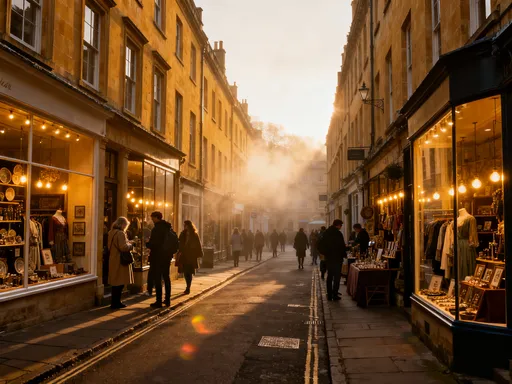
If Victoria is the island’s central hub, then Sqaq il-Kbira—the main street—is its steady pulse. Translating to 'Large Street' in Maltese, this thoroughfare is more than a route from point A to B; it is a continuous public corridor where commerce, conversation, and culture intersect. Unlike commercial streets in larger cities that prioritize speed and transaction, Sqaq il-Kbira moves at the pace of human interaction. Shops open directly onto the sidewalk, their displays spilling into the public realm. Bakeries release the warm scent of ftira bread, hardware stores stack tools and gardening supplies in colorful arrays, and family-run groceries offer everything from olives to homemade wine. There is no chain branding, no neon signage—just the quiet pride of local ownership and generational continuity.
What makes this street truly alive is not just what is sold, but how people use the space around it. Along its length, there are no dedicated plazas, yet pockets of public life form organically. A cluster of benches outside the post office becomes a morning meeting spot for retirees. A shaded alcove near the church steps serves as an impromptu café where neighbors sip coffee from paper cups. Even the sidewalks are wide enough to allow for lingering, for pausing to talk without blocking the way. This design—unplanned yet deeply functional—reflects a culture that values time and relationship over efficiency. The open-air market, held twice weekly, amplifies this rhythm. Stalls line both sides of the street, selling fresh produce, herbs, honey, and hand-knitted goods. Shoppers move slowly, touching tomatoes, tasting figs, bargaining with smiles. There is no rush, no pressure to buy, just the pleasure of exchange.
Children weave through the crowd on bicycles, elders walk with canes and shopping bags, and dogs are welcomed on leashes. The space belongs to everyone. There are no security barriers, no timed entries, no tickets. This level of access is not taken for granted—it is the result of decades of communal stewardship. Shop owners do not see the street as a backdrop to their business; they see it as part of their social world. They water the potted plants on the sidewalk, report broken tiles to the council, and greet customers by name. In this way, the public realm is co-owned, not just by the government, but by the people who use it daily. Sqaq il-Kbira is not a tourist attraction to be visited and left behind. It is a living example of how public space, when treated with care and continuity, becomes the heart of a community.
Temples and Towns: Where Ancient Meets Public Daily Use
Just northeast of Victoria lies one of the oldest free-standing structures in the world—the Ggantija Temples, a UNESCO World Heritage Site dating back over 5,600 years. While many ancient sites are enclosed, ticketed, and separated from daily life, Ggantija is different. It is not isolated behind fences or elevated on a restricted platform. Instead, it sits within a broader public landscape, surrounded by open fields, walking paths, and local farms. This integration is not merely physical—it is cultural. For Gozitans, the temples are not relics frozen in time, but part of a living environment. Joggers pass by on morning runs, families picnic on nearby grassy knolls, and schoolchildren walk here for outdoor lessons. The boundary between heritage and habitat is intentionally porous.
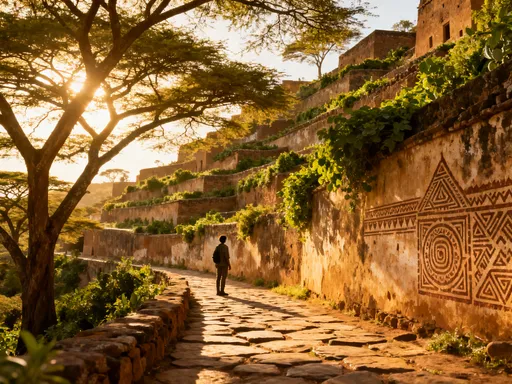
The area around the temples is crisscrossed with traditional pathways—some paved, others dirt tracks—that have been used for centuries. These routes are not marked as formal trails, yet they are well-maintained by local use. They connect villages, farmland, and coastal areas, forming a network of public access that encourages exploration. What is remarkable is how naturally these ancient and modern uses coexist. There are no loudspeaker tours, no souvenir kiosks, no commercial developments pressing against the site. The visitor center is modest, the signage respectful and informative. The focus remains on preservation through integration, not isolation. This approach allows both locals and visitors to engage with history in a way that feels immediate and unmediated.
Even the act of walking to the site becomes part of the experience. From Xagħra, it is a fifteen-minute stroll through quiet lanes, past stone farmhouses and fields of carob trees. Along the way, you might pass a farmer tending goats, a woman hanging laundry, or a group of teenagers sitting on a wall, laughing. The temples do not stand apart from life—they are embedded within it. This seamless blending of past and present is a hallmark of Gozo’s public philosophy. Heritage is not something to be locked away; it is something to be lived alongside. By allowing daily life to unfold near ancient sites, the island ensures that history remains relevant, not just remembered. It teaches respect not through rules, but through proximity. When children grow up seeing the temples as part of their landscape, they learn to value them not because they are told to, but because they belong to the same world.
Coastal Commons: Xlendi Bay and Public Access to Nature
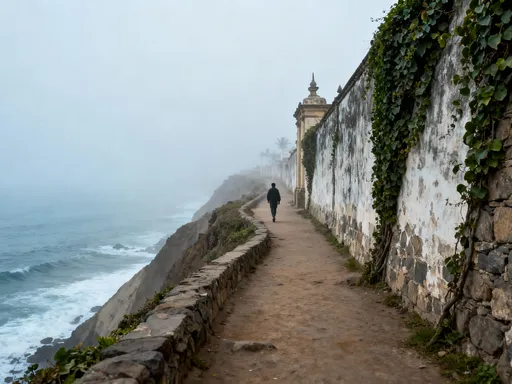
On the southern coast, Xlendi Bay offers one of the most beautiful examples of accessible public space in the Mediterranean. Nestled between steep limestone cliffs, this small fishing village has transformed its shoreline into a shared realm where nature, recreation, and community come together. The seafront promenade is wide and level, designed for walking, sitting, and gathering. Stone steps lead down to the water, allowing swimmers of all ages to enter safely. There are no private beaches, no gated resorts, no sunbed rentals. Instead, the coastline is open to all, with natural rock platforms serving as sunbathing spots and shaded coves offering quiet refuge.
The design of Xlendi’s waterfront reflects a deep understanding of inclusive access. Seating is abundant—stone benches, low walls, and wooden platforms are placed at regular intervals, allowing elders to rest, families to picnic, and couples to watch the sunset. The lighting is soft and functional, preserving the night sky while ensuring safety. Restaurants and cafés line the upper edge of the promenade, but they do not dominate. Their outdoor seating blends into the public space rather than enclosing it. There are no loud music systems or flashing signs—just the sound of waves, children laughing, and the occasional strum of a guitar from a street performer. This balance between commerce and community is carefully maintained, ensuring that the bay remains a place for everyone, not just paying customers.
One of the most touching traditions in Xlendi is the evening gathering at sunset. As the sky turns gold and pink, locals and visitors alike make their way to the water’s edge. Some swim, some sit in silence, others share drinks with friends. There is no announcement, no event schedule—just a quiet, collective ritual that has grown over time. This informal practice speaks volumes about the role of public space in fostering connection. It is not programmed or monetized; it is organic, born from the simple availability of a beautiful, shared place. In a world where so many coastal areas have been privatized or overdeveloped, Xlendi stands as a model of what is possible when nature is treated as a common good. Here, the sea is not a commodity—it is a companion.
Elevated Perspectives: Dwejra’s Open Landscape and Collective Memory
In the northwest, the Dwejra area offers a different kind of public space—one shaped by geology as much as by human care. This coastal zone is home to some of Gozo’s most dramatic landscapes: the Inland Sea, a collapsed sea cave connected to the open ocean by a narrow tunnel; Fungus Rock, a solitary limestone stack once believed to hold medicinal properties; and the Azure Window site, where a famous natural arch once stood before its collapse in 2017. What makes Dwejra exceptional is that it remains an open, un-ticketed landscape. There are no entrance fees, no timed entries, no commercial complexes. Visitors walk freely along marked but unobtrusive paths, choosing their own pace and perspective.
The walking trails here are designed with both safety and contemplation in mind. Stone steps and railings are used where necessary, but the overall feel is one of natural access. Interpretive signs provide historical and ecological information in multiple languages, but they are placed discreetly, allowing the landscape to speak for itself. Birdwatchers, geology enthusiasts, photographers, and families all share the space without conflict. The absence of strict boundaries encourages a sense of stewardship—when people are trusted to behave respectfully, they often do. There are no litter bins overflowing with plastic, no graffiti, no damage to fragile formations. Instead, there is a quiet understanding that this place is precious because it is shared.
Dwejra also holds a special place in Gozitan memory. Older residents recall swimming through the Azure Window as children, climbing the cliffs with friends, or gathering medicinal herbs from the rocky slopes. These personal stories are part of the site’s unofficial heritage, passed down through generations. By keeping the area open and accessible, the island ensures that new memories can be made. Children today still splash in the Inland Sea, couples still take photos at the edge of the cliffs, and hikers still pause at the top to breathe in the vastness of the sea. This continuity—between past and present, between individual and collective experience—is what makes Dwejra more than a scenic viewpoint. It is a living archive, written in stone and sustained by public care.
Design With Soul: What Makes Gozo’s Public Spaces Work
Behind Gozo’s welcoming public spaces is a set of quiet but powerful design principles. These are not dictated by grand urban plans or international consultants, but grown from local wisdom and practical experience. First is the principle of human scale. Buildings are low, streets are narrow, and pathways are sized for walking, not speeding. This creates intimacy and comfort, making the environment feel safe and navigable for all ages. Second is the use of local materials—golden limestone, terracotta tiles, wrought iron—which tie the built environment to the natural landscape. These materials age gracefully, developing a patina that speaks of time and use.
Third is the intentional inclusion of rest and pause. Benches are not afterthoughts; they are essential infrastructure. They appear in clusters near churches, along promenades, and at the end of walking trails. Many are shaded by trees or awnings, making them usable even in midday heat. Fountains are another recurring feature—some decorative, others functional—offering cool water and a soothing sound. These elements support mental restoration, giving people a reason to linger rather than rush through. Fourth is pedestrian priority. Cars are present, but they do not dominate. Traffic is slow, parking is limited, and many areas are fully walkable. This encourages movement on foot, which in turn fosters chance encounters and social bonds.
Finally, there is a deep respect for continuity. Public spaces in Gozo are not redeveloped every few years to follow trends. Instead, they evolve gradually, with repairs and additions that respect the original character. A broken bench is replaced with one of the same design; a cracked fountain is restored, not removed. This consistency creates a sense of stability and belonging. People know where to find the shaded corner, the best view, the quiet spot to read. Over time, these places become part of personal and collective memory. The result is not just functional design, but emotional resonance. Gozo’s public spaces work because they are not designed for visitors—they are designed for life.
Staying Longer: Choosing Where to Be, Not Just Where to Sleep
For travelers seeking a deeper connection, accommodation choices in Gozo offer more than comfort—they offer context. While there are hotels and guesthouses, the most rewarding stays are those that place you within the rhythm of village life. Choosing a rental in the heart of Victoria, Xlendi, or Nadur means waking up within earshot of church bells, walking past bakeries that open at dawn, and having your morning coffee in a square where locals gather. It means returning in the evening to find the same neighbors sitting on their doorsteps, the same cats napping in the sun, the same slow unfurling of daily life.
Staying centrally also maximizes access to public spaces without relying on a car. From Victoria, Dwejra is reachable by bus or bicycle; from Xlendi, the coastal paths begin just steps from the promenade. Even short walks reveal hidden courtyards, quiet alleyways, and neighborhood chapels that never appear in guidebooks. These are the spaces where Gozo’s soul is most visible—not in grand monuments, but in the details of everyday use. Walking becomes not just transportation, but a form of participation. Each step reinforces a sense of place, of being somewhere real and lived-in.
This kind of immersion changes the nature of travel. It shifts the focus from collecting sights to cultivating presence. Instead of ticking off attractions, you begin to notice patterns—the time the market closes, when the fishermen bring in their catch, how the light falls on the limestone in late afternoon. These rhythms become part of your own experience. And in that quiet alignment, a deeper kind of belonging begins to form. You are not just passing through. You are, in small but meaningful ways, part of the life around you.
Conclusion: Belonging, Not Just Visiting
Gozo’s public spaces are not merely places to see—they are invitations to participate. They remind us that travel at its best is not about escape, but about connection. In a world where so many destinations are designed for consumption, Gozo stands apart by offering something more valuable: the chance to belong. Its plazas, paths, and promenades are not curated for photographs, but lived in, worn smooth by time and use. They reflect a culture that values community, continuity, and quiet dignity.
What makes these spaces so powerful is their openness—their refusal to separate, to exclude, to monetize every experience. They are democratic by design, accessible to all, and sustained by mutual respect. In them, we see a model for how places can be both beautiful and functional, historic and alive, shared and personal. For the traveler, especially one seeking meaning beyond the surface, Gozo offers a rare gift: the feeling of being welcomed not as a customer, but as a fellow human being.
So when you next plan a journey, consider not just where you will sleep, but where you will be. Seek destinations where life unfolds in the open, where public spaces are not afterthoughts but the heart of the matter. Choose places that invite you in, not just to look, but to linger, to listen, to become part of the story. Because in the end, the most memorable travels are not those that take us far from home, but those that help us feel at home—wherever we are.