You Won’t Believe These Hidden Urban Shots I Snapped in Incheon
Incheon isn’t just an airport layover—it’s a visual playground. I went in chasing cityscapes and left with a memory card full of surprises. From graffiti alleyways to neon-lit underpasses, the urban fabric here pulses with creative energy. Whether you're into street photography or just love seeing a city through a new lens, Incheon delivers raw, unfiltered moments. This is urban photography that feels alive—unexpected, layered, and totally real. Let me take you where the map ends and the magic begins.
Beyond Transit: Rediscovering Incheon as a Photographer
Incheon is often reduced to a transit hub—a place to pass through, not to pause in. For millions, it’s the first or last impression of South Korea, seen through the sterile glass of Terminal 1 or 2. But beyond the airport’s polished corridors lies a city that defies simplification. Incheon is a place of contrasts, where centuries-old neighborhoods coexist with futuristic districts, and where urban change unfolds in real time. As a photographer, this duality is magnetic. The city doesn’t present itself all at once; it reveals itself in fragments—in the curve of a weathered rooftop, the glow of a late-night convenience store, or the quiet dignity of a fisherman mending nets by the harbor.
What drew me to Incheon wasn’t fame or reputation, but curiosity. I wanted to see what happens when a city is overlooked. When travelers rush to Seoul or Busan, Incheon remains in the background, quietly evolving. And that’s precisely what makes it compelling. It’s not performative. It doesn’t dress up for visitors. There’s an honesty in its streets, a lack of pretense that allows for authentic visual storytelling. I didn’t come with a checklist of landmarks. I came with a lens, a willingness to wander, and the belief that beauty often hides in plain sight.
Photographing Incheon became an exercise in redefinition. Instead of chasing iconic views, I focused on the in-between spaces—the edges, the transitions, the overlooked corners. A city defined by movement taught me to slow down. I learned to appreciate the rhythm of daily life: the way sunlight hits a metal shutter at 8:15 a.m., the pattern of footprints on a rainy sidewalk, the quiet moments between shifts at a corner market. Incheon, I discovered, isn’t just a gateway. It’s a destination in its own right—one that rewards those who look a little closer.
Chinatown & Its Vibrant Edges: Color, Culture, Contrast
No part of Incheon embodies visual richness quite like its Chinatown, the oldest and largest of its kind in Korea. Nestled in the heart of Jung-gu, this neighborhood is a living mosaic of cultural fusion. The red lanterns that stretch across the main street are more than decoration—they’re a declaration of identity, a splash of warmth against the often-gray Korean sky. Walking through the area feels like stepping into a different time zone, where the scent of stir-fried noodles mingles with the hum of conversation in Korean, Mandarin, and dialects in between.
For photographers, Chinatown is a feast of composition. The contrast between old and new is everywhere. A hand-painted sign in calligraphy hangs beside a digital menu board. A grandmother folds dumplings behind a glass counter while a teenager films a TikTok in front of a neon dragon mural. These layers create depth in every frame. I found myself drawn to textures: the chipped paint on wooden storefronts, the reflection of red lanterns on wet pavement after rain, the intricate carvings on temple gates tucked between modern cafes. Each detail tells a story—not just of migration and survival, but of adaptation and resilience.
One of the most powerful aspects of photographing here is the human element. Street vendors, children playing near market stalls, elders sharing tea in tiny outdoor seating areas—these moments are unposed, unfiltered, and deeply moving. I made it a rule to ask permission when photographing individuals up close, not only out of respect but to create space for connection. Some of my most memorable shots came after a smile, a nod, or a brief conversation. The woman selling tteokbokki who posed with her hands on her hips. The young couple sharing a plate of jajangmyeon under a string of lights. These images aren’t just visually striking—they carry emotion, warmth, and a sense of place.
The key to capturing Chinatown’s essence is to embrace its chaos. Don’t try to control the frame too much. Let the colors clash, let the signs overlap, let the energy spill into your lens. Use a wide aperture to isolate subjects against busy backgrounds, or go wide-angle to include the full scene. Shoot from low angles to emphasize the height of the lanterns, or from above to capture the flow of people. The best shots often come when you’re not chasing perfection, but presence.
Songdo International City: Futurism in Frame
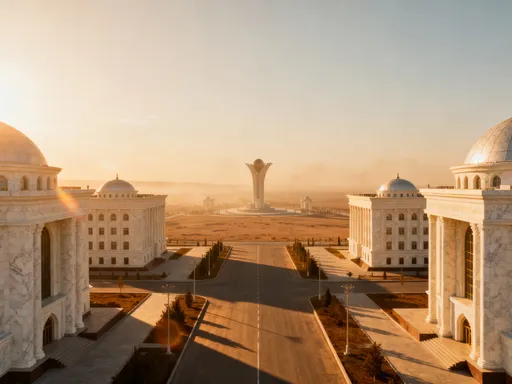
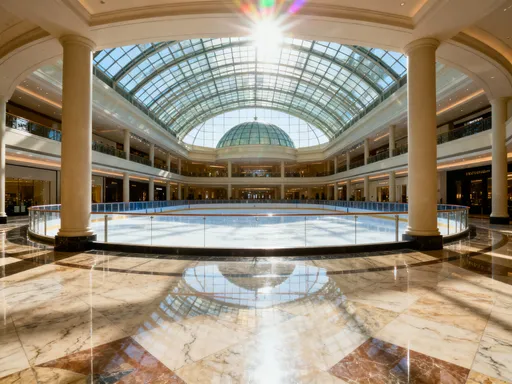
If Chinatown is a celebration of heritage and spontaneity, Songdo International City is a vision of order and innovation. Located on reclaimed land along the Yellow Sea, Songdo is a planned urban district designed to be a model of smart city living. Glass towers rise like mirrors to the sky, reflecting clouds and sunlight in ever-changing patterns. Wide boulevards, tree-lined canals, and seamless public transit create a sense of calm efficiency. To photograph Songdo is to engage with geometry, light, and the quiet beauty of human design.
One of the most striking aspects of Songdo is its symmetry. Buildings align with precision, walkways follow clean lines, and even the parks are arranged with intention. This makes it ideal for architectural photography. I found that the golden hour—just after sunrise or before sunset—transforms the district. The low angle of the sun creates long shadows and warm glows on glass facades, turning entire blocks into glowing canvases. Reflections double the visual impact: a single tower becomes two, a path of trees multiplies into a corridor of green. Using a polarizing filter helped reduce glare while enhancing contrast, especially on overcast days when the sky threatened to flatten the scene.
But Songdo isn’t just about stillness. Despite its sleek appearance, the city is alive with movement. Cyclists glide along dedicated lanes, office workers stream into buildings during morning rush, and families stroll by the waterfront in the evening. I used a slower shutter speed to capture motion blur—commuters walking across a bridge, bicycles streaking past a fountain—while keeping the background sharp. This technique adds rhythm to otherwise static compositions. Drones are restricted in the area, but from ground level, even a smartphone can capture stunning perspectives, especially when using grid lines to align with the city’s natural symmetry.
What makes Songdo particularly interesting is its contrast with the rest of Incheon. It feels almost futuristic, yet it’s deeply connected to the real world. People live here, work here, raise families here. My advice? Don’t treat it as a sterile backdrop. Look for signs of life: a coffee cup on a balcony, a child’s drawing taped to a window, a street performer near the central park. These human touches ground the high-tech environment and make for more relatable, emotionally resonant photos.
Old Neighborhoods & Hidden Alleys: Where Texture Tells Stories
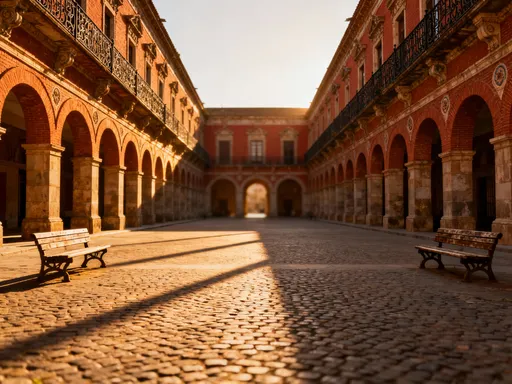
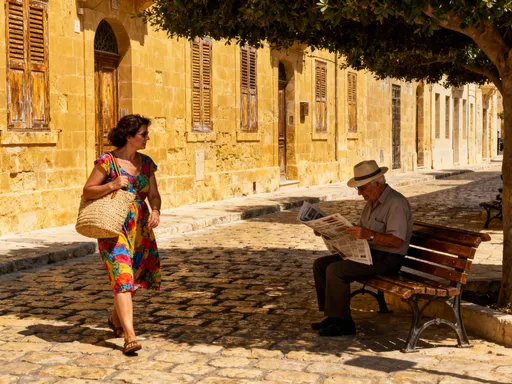
While Songdo represents the future and Chinatown the cultural past, Incheon’s older residential neighborhoods speak to the quiet poetry of everyday existence. These are the areas without guidebook entries, the streets that don’t appear on tourist maps. Tucked behind main roads and railway lines, they’re full of narrow alleys, faded murals, and homes with decades of history in their walls. Here, the city slows down. Laundry hangs between buildings like colorful flags. Cats nap on sun-warmed concrete. Elderly residents sit on folding chairs, watching the world go by.
These neighborhoods are a treasure trove for texture photography. Peeling paint, rusted metal, cracked sidewalks, and hand-written signs create a visual language of wear and care. I spent hours in districts like Daldong and Galhyeon-dong, where time seems to move differently. A single wall might tell multiple stories: graffiti from teenagers, posters for local events, patches of moss growing in the mortar. I used a macro lens to capture small details—a chipped tile, a rusted lock, the pattern of rain on a corrugated roof. These close-ups, when printed large, become abstract art, evoking mood and memory.
The charm of these areas lies in their unpredictability. You can’t plan for the old man repairing a bicycle with tools laid out on a newspaper. You can’t schedule the moment a child runs through a puddle, sending water flying in golden light. The best approach is to wander without a destination. Leave the GPS behind. Let curiosity guide you. Turn down alleys that look like dead ends. Pause at sounds—the clink of dishes, the hum of a sewing machine, the laughter from an open window. These are the moments that define a place.
Photographing in these neighborhoods requires sensitivity. These are people’s homes, not stages. I always moved quietly, avoided intrusive zooming, and smiled when making eye contact. If someone seemed uncomfortable, I lowered my camera and moved on. Respect builds trust, and trust often leads to unexpected opportunities—a wave, an invitation to take a photo, a shared story. Some of my most cherished images came from these quiet exchanges, not from grand vistas.
Transit as Theater: Capturing Movement and Rhythm
Incheon’s transportation hubs are more than functional spaces—they’re stages for human drama. Subway stations, bus stops, overpasses, and ferry terminals pulse with routine and urgency. Each day, thousands move through these spaces, carrying briefcases, shopping bags, dreams, and fatigue. As a photographer, I began to see transit not as background noise, but as the heartbeat of the city. The way people wait, walk, talk, or zone out on their phones reveals subtle truths about urban life.
I spent mornings at Incheon Station and evenings at Bupyeong Station, observing the ebb and flow of commuters. The challenge was to capture motion without losing clarity. I used shutter speeds between 1/30 and 1/60 of a second to create motion blur in moving figures while keeping the background stable. This technique gives a sense of speed and rhythm. A woman walking down an escalator becomes a streak of color. A train pulling into the station turns into a blur of light. Meanwhile, a stationary figure—a man checking his watch, a child holding a balloon—anchors the frame with stillness.
Candid photography in transit zones walks a fine line between authenticity and privacy. I avoided photographing people in vulnerable moments—sleeping, crying, or in distress. Instead, I focused on gestures: hands holding railings, feet stepping off platforms, reflections in train windows. These details convey emotion without intrusion. I also made use of mirrors and glass surfaces, which offer layered compositions. A single shot might include a passerby, their reflection, and the city beyond—all in one frame.
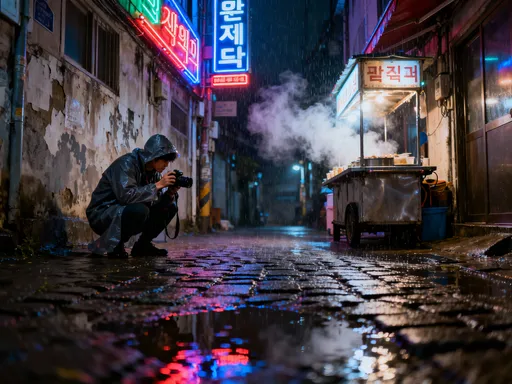
One of the most powerful transit photos I took was at a pedestrian overpass at dusk. Rain had just stopped. The wet surface mirrored the neon signs of nearby shops. A lone figure walked into the distance, backlit by streetlights. The image wasn’t about who they were, but what they represented—a moment of solitude in a busy city. It reminded me that even in crowds, we carry our own worlds. Photography, at its best, honors that quiet humanity.
Weather & Light: Turning Incheon’s Mood into Magic
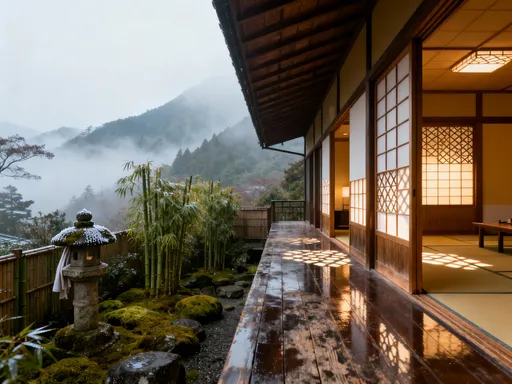
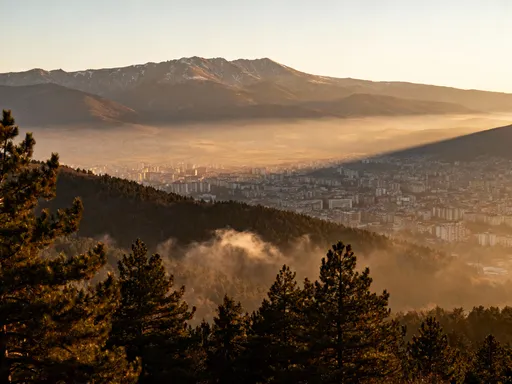
Many photographers wait for perfect weather—clear skies, bright sun, ideal conditions. But in Incheon, I learned to welcome the imperfect. Fog rolling in from the Yellow Sea can turn the city into a dreamlike silhouette. Rain transforms streets into reflective canvases. Overcast skies act as a giant softbox, eliminating harsh shadows and creating even lighting. These conditions don’t hinder photography—they elevate it.
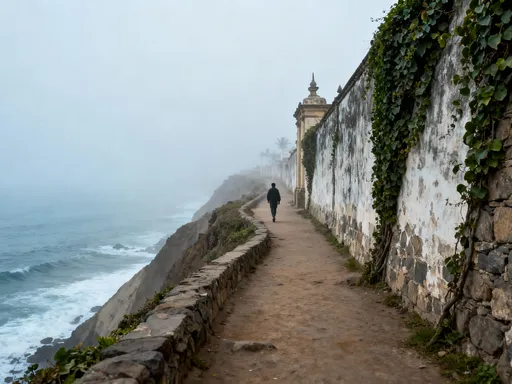
I remember one morning in late autumn when a thick fog settled over the waterfront. The usual skyline was barely visible, reduced to ghostly outlines. Streetlights glowed like stars. I adjusted my camera settings—increased ISO to 800, used a wider aperture (f/2.8), and stabilized with a small tripod. The resulting images had a cinematic quality, full of mystery and mood. Even simple scenes, like a bench by the harbor or a row of bicycles, became poetic under the veil of mist.
At night, Incheon reveals another dimension. Neon signs in Chinatown, blue-white streetlights in Songdo, the warm glow of convenience stores—these artificial lights create a visual rhythm. I experimented with long exposures (5–10 seconds) to capture light trails from passing cars or the smooth flow of a ferry across dark water. Using a tripod was essential, but even handheld shots worked with image stabilization and higher ISO settings. I often underexposed slightly to preserve highlight details, then adjusted in post-processing.
For low-light photography, I recommend a lens with a wide aperture (f/1.8 or lower) and a camera with good high-ISO performance. But even entry-level gear can produce stunning results with the right technique. Shoot in RAW format for greater editing flexibility. Use manual focus in dim conditions where autofocus struggles. And don’t be afraid to embrace grain—it adds character, like the texture of old film. Incheon’s weather and light aren’t obstacles. They’re collaborators in storytelling.
Why Incheon Deserves a Closer Look—And Your Lens
By the end of my week in Incheon, my memory card held over a thousand images. But more than the photos, I carried a shift in perspective. Incheon taught me that significance isn’t always announced with fanfare. Sometimes, it whispers—from a cracked wall, a passing glance, a reflection in a puddle. This city, so often overlooked, became a reminder that depth exists everywhere, if we’re willing to look.
Urban photography is more than a technical skill. It’s a way of seeing. It slows us down. It asks us to notice the details others ignore. In a world that values speed and efficiency, taking the time to observe—to truly see a place—is a radical act. Incheon, with its blend of history, innovation, and everyday life, offers a perfect canvas for this kind of attention.
I encourage every traveler, especially those who feel pressed for time or bound by itineraries, to pause in places like Incheon. Don’t just pass through. Step off the expected path. Let your curiosity lead you down alleys with no names. Talk to locals. Sit on a bench and watch the light change. You don’t need a professional camera to participate. A smartphone, a quiet moment, and an open mind are enough.
Because in the end, it’s not about capturing the perfect shot. It’s about connecting—with a place, with its people, with the quiet beauty of ordinary life. Incheon doesn’t demand your attention. But if you give it, it will reward you with moments that stay with you long after you’ve boarded your next flight. So the next time you land in Incheon, don’t just wait for your connection. Pick up your camera, step outside, and start exploring. The city is waiting—and it’s full of stories only you can tell.