Tired of Forgetting to Drink Water During Creative Work? This App Keeps You Hydrated Without Breaking Focus
We’ve all been there—deep in the flow of a creative project, only to realize hours have passed and you haven’t had a single sip of water. Your throat feels dry, your head aches, and your energy is crashing. What if a simple tool could gently remind you to hydrate without pulling you out of your zone? This isn’t about perfection—it’s about working smarter, staying healthy, and giving your creativity the fuel it truly needs. As someone who’s spent countless afternoons writing, designing, or planning with a half-empty mug and zero water in sight, I can tell you this: dehydration doesn’t announce itself with a siren. It sneaks in quietly, stealing your focus one sip at a time.
The Creative Burnout Trap: How Dehydration Sneaks Up on You
Imagine this: it’s 11 a.m., and you’re finally in the groove. The kids are at school, the house is quiet, and you’ve carved out an hour—or maybe even two—to work on that project you’ve been dreaming about. Maybe it’s a blog post, a painting, a new recipe, or a handmade gift. You’re typing, sketching, mixing, or arranging, completely absorbed. Time slips away. The sun moves across the room. And before you know it, it’s 2 p.m., and you haven’t eaten, stretched, or taken a single drink of water. Sound familiar? This isn’t a failure of discipline—it’s a sign of deep engagement. When we’re in that creative zone, our brain prioritizes the task at hand, and basic bodily needs fade into the background.
But here’s what happens when we ignore those needs: dehydration starts to creep in. At just 1-2% loss of body water, you might not feel thirsty, but your cognitive performance begins to dip. You might notice it as brain fog—those moments when words won’t come, ideas stall, or you keep rereading the same sentence. You feel tired, maybe a little irritable, and suddenly that project doesn’t seem worth the effort. I remember one afternoon when I was finalizing a big article for a client. I’d been writing for three straight hours, proud of my progress, only to hit a wall. My neck was stiff, my eyes felt heavy, and I couldn’t focus. I thought I needed coffee. But then I looked at my desk—empty glass, untouched since morning. I poured a big glass of water, drank it slowly, and within 20 minutes, the fog lifted. It wasn’t the work that was hard—it was my body asking for help.
Dehydration affects more than just energy. It impacts mood, concentration, and even short-term memory. Studies show that even mild dehydration can lead to increased feelings of anxiety and fatigue, especially in women. And for those of us juggling creative work with family, home, and personal goals, that extra mental strain can feel overwhelming. The truth is, creativity doesn’t thrive on burnout. It thrives on clarity, calm, and care. And one of the simplest ways to support that is by staying hydrated—without making it another chore on an already long list.
Why Traditional Reminders Fail Creatives
You’ve probably tried setting alarms to drink water. Maybe you’ve used a calendar notification or a sticky note on your laptop. And how did that go? If you’re like most people, those reminders either got ignored or ended up being more disruptive than helpful. A loud alarm blaring in the middle of a thought can feel like an invasion. You jump, lose your train of thought, and by the time you come back to your work, that spark is gone. That’s what experts call the “interruption cost”—the mental energy it takes to shift focus, respond to the alert, and then refocus on your task. For creative work, where ideas often build slowly and subtly, that cost can be surprisingly high.
I used to set hourly alarms on my phone. Every 60 minutes, a loud beep would go off, and I’d groan. Sometimes I’d silence it without even thinking. Other times, I’d get up, take a sip, and feel annoyed that my rhythm had been broken. It didn’t feel supportive—it felt like being scolded. And that’s the problem with many traditional reminders: they treat hydration like a rule to follow, not a habit to nurture. They don’t take into account when you’re in the middle of something important, or how your day actually unfolds. They’re rigid, one-size-fits-all, and often end up being counterproductive.
What we need instead are cues that respect our workflow. Think of it like a good conversation—someone who knows when to speak and when to listen. A helpful reminder shouldn’t pull you out of your zone; it should gently guide you back to your body without breaking your flow. That’s where smart technology comes in—not as a boss, but as a quiet partner that learns your rhythm and supports you in a way that feels natural. The goal isn’t to add more noise to your day, but to create a system that helps you stay hydrated in a way that feels effortless, even kind.
Meet the Quiet Hero: How Water Intake Apps Adapt to Your Day
This is where water tracking apps step in—not as another demanding tool, but as a thoughtful companion in your daily routine. These aren’t just digital notepads for logging cups of water. The best ones are designed with real life in mind. They learn when you’re most active, when you tend to forget, and how to remind you in a way that feels supportive, not stressful. Imagine an app that knows you usually drink water after your morning coffee, so it sends a soft notification: “Great start! How about a glass of water now?” Or one that notices you’ve been working for 90 minutes straight and gently suggests, “You’ve been focused—time to refresh your mind and body.”
What makes these apps different is personalization. You can set your daily goal based on your body, lifestyle, and climate. If it’s a hot summer day or you’ve just finished a walk with the dog, the app can adjust your target upward. If you’re feeling under the weather or having a lighter day, it won’t guilt-trip you—it’ll adapt. Some apps even let you log how you’re feeling—tired, focused, stressed—and over time, you start to see patterns. You might notice that on days when you drink enough water, you feel calmer, more alert, and more creative. That kind of insight isn’t just helpful—it’s empowering.
And the best part? These apps don’t require constant attention. You don’t need to open them every time you drink. Many let you log with a single tap, or even integrate with wearable devices that track your movement and hydration cues. Some connect to your calendar, so they know when you’re in a meeting and hold off on reminders. Others use ambient sounds—a soft chime, a bird song, a gentle hum—so the alert feels soothing, not jarring. It’s like having a friend who quietly hands you a glass of water just when you need it, without making a big deal out of it.
Seamless Integration: Fitting Hydration into Your Creative Flow
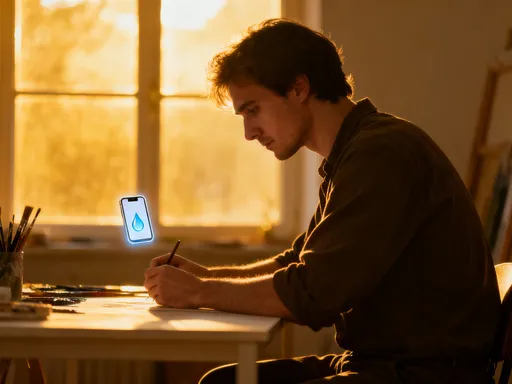
The magic of these apps isn’t in their features—it’s in how they disappear into your day. You don’t want to spend time managing a tool that’s supposed to help you. You want it to work quietly in the background, like good music playing while you work. That’s why design matters. The most effective apps have clean, simple interfaces. No clutter, no flashing badges, no pressure. Just a calm visual—maybe a growing plant that blooms as you drink, or a water level that rises with each sip. These small details make tracking feel rewarding, not exhausting.
I started using one of these apps during a busy week when I was preparing for a local craft fair. I was making handmade soaps, packaging orders, and updating my website—all while keeping up with family routines. I knew I wasn’t drinking enough, but I didn’t want to add another thing to manage. So I picked an app with a minimalist dashboard and set it to remind me after I completed a batch of soaps. The first time it chimed, it was right after I finished labeling ten jars. The message said, “Nice work! Hydrate and keep creating.” It felt like encouragement, not a demand. I poured a glass, took a few sips, and actually paused to stretch. That small break didn’t slow me down—it helped me reset.
Another feature I love is the ability to pair reminders with habits I already have. For example, I set a prompt to appear when I finish replying to emails. Since I check my inbox several times a day, it became a natural rhythm: respond, drink, move on. No extra thinking required. Some apps even sync with music or podcast apps, so you get a gentle nudge when a playlist ends or a chapter finishes. It’s a subtle way to tie hydration to moments of transition, when your brain is already pausing. Over time, these small connections turn into automatic habits—no willpower needed.
Beyond Thirst: The Ripple Effect on Focus and Mood
Here’s what surprised me most: once I started staying hydrated consistently, the benefits went far beyond just feeling less tired. I noticed my thinking was clearer. Ideas came more easily. I wasn’t as reactive when things didn’t go as planned—like when a shipment was delayed or a recipe didn’t turn out right. I had more patience, more resilience. And I wasn’t imagining it. Research shows that proper hydration supports cognitive functions like attention, memory, and executive control. It also helps regulate mood by supporting balanced neurotransmitter activity. In simple terms, water helps your brain work better—and feel better.
I remember one evening when I was working on a complicated knitting pattern. I’d been stuck on the same row for 20 minutes, frustrated and ready to give up. Then my app gently reminded me to drink. I took a few sips, stood up, walked around, and when I sat back down, I saw the mistake immediately. It was such a small moment, but it reminded me that sometimes, the solution isn’t to push harder—it’s to pause, refresh, and come back with a clear mind. And that’s the real gift of staying hydrated: it doesn’t just keep your body functioning—it protects your creativity, your calm, and your joy.
My daughter noticed the change too. She said, “Mom, you seem less stressed lately.” I smiled and said, “I’m just drinking more water.” She laughed, but it’s true. When we take care of the small things—like sipping water throughout the day—we build a foundation of well-being that supports everything else. We become more present with our families, more patient with ourselves, and more open to inspiration. It’s not about perfection. It’s about showing up for yourself in quiet, consistent ways.
Building a Sustainable Habit: From Tracking to Routine
Now, you might be thinking, “This sounds great, but will I actually stick with it?” I asked myself the same thing. The key, I’ve learned, is to start small and make it personal. You don’t need to track every sip from day one. Pick one moment in your day—after breakfast, after a phone call, before checking social media—and pair it with a glass of water. Use a bottle you love, one that feels good in your hand and looks beautiful on your desk. Make it a ritual, not a chore.
The app is there to support you, not judge you. Some days you’ll hit your goal. Others, you won’t. And that’s okay. What matters is the intention. I like to celebrate the small wins—like when I remember to drink after a long phone call with a friend, or when I refill my bottle without thinking. Those are the moments when a habit starts to feel natural. And if you miss a day? No guilt. Just begin again. The app doesn’t keep score—it helps you stay connected to your body and your needs.
Another tip: involve your family. I started leaving a few colorful water bottles on the kitchen counter, and my kids began grabbing them too. We turned it into a little game—“Who can finish their water first?”—and now it’s part of our routine. Hydration became a shared value, not just a personal goal. And when your home feels supportive, it’s so much easier to take care of yourself.
A Smarter, Kinder Way to Work: Why Small Tech Wins Matter
At the end of the day, this isn’t just about drinking more water. It’s about redefining what productivity means. For so long, we’ve been told that success comes from pushing harder, doing more, sacrificing self-care for achievement. But what if the real breakthrough comes from slowing down, listening to our bodies, and using technology to support—not exploit—our humanity? Tools like water tracking apps remind us that small acts of care add up. They’re not flashy or loud, but they’re deeply meaningful.
When you stay hydrated, you’re not just avoiding headaches—you’re protecting your creativity, your energy, and your emotional balance. You’re giving yourself the foundation to show up as your best self, for your work and for your loved ones. And in a world that often feels overwhelming, that kind of quiet strength is everything. So the next time you’re deep in a project, let a gentle reminder guide you back to your glass. Take a sip. Breathe. And remember: the most powerful tool you have isn’t your laptop, your notebook, or your skills—it’s your well-cared-for self. Because when you feel good, everything else flows a little easier.