Tired of chaotic group chats for event planning? Here’s the tool that brought us all together
Planning gatherings used to mean endless texts, missed messages, and confusion over who was bringing what. Sound familiar? I felt the same—until I discovered a smarter way. This isn’t about another app overload. It’s about using the right features in tools we already have to simplify life, strengthen connections, and finally enjoy stress-free plans with friends and family. Let me show you how.
The Messy Reality of Group Event Planning
How many times have you stared at your phone, scrolling through a 200-message group chat, trying to find out if your cousin is bringing the dessert for Sunday dinner? Or worse—showing up with three lasagnas because no one realized everyone assumed someone else would bring it? I’ve been there, more times than I can count. Just last summer, I planned what I thought would be a perfect family picnic at the lakeside park. I sent out a message in our family group, got a few quick replies, and assumed everything was set. But on the day of, only half the family showed up, two people forgot the coolers, and my nephew—whose birthday we were celebrating—was confused about the time. It wasn’t anyone’s fault, really. We all thought someone else had the details. The picnic wasn’t ruined, but the joy was dampened by the disorganization.
That’s the thing about group planning—it starts with such good intentions. We want to come together, share meals, celebrate milestones, and just be present. But the moment you add more than three people to the mix, things get messy. Messages get buried under jokes, memes, and random check-ins. People reply late, or not at all. Time zones get ignored. Someone changes their mind last minute, but only tells one person, who forgets to update the group. And before you know it, the event that was supposed to bring people closer ends up causing tension. I’ve seen friendships strain over a mismanaged holiday potluck. I’ve watched my sister cancel her annual book club dinner because she was too exhausted from chasing RSVPs. It’s not that we don’t care. It’s that the tools we’re using make caring feel like work.
And let’s be honest—most of us are already juggling so much. Between work, kids, aging parents, and just keeping the house running, the last thing we need is another mental load. Yet, hosting or even just participating in gatherings often feels like an extra chore. We start avoiding it, not because we don’t want to connect, but because the process feels overwhelming. I remember telling my best friend, 'I love seeing everyone, but I just can’t deal with the texting chaos anymore.' She looked at me and said, 'What if it didn’t have to be that way?' That question stuck with me. And it led me to a solution I never expected—right inside an app I’d been using for years.
What We’ve Tried (And Why It Failed)
Over the years, I’ve tried every workaround imaginable. Sticky notes on the fridge. Shared Google Docs with checkboxes. Even a color-coded spreadsheet once—yes, really. I thought if I just organized it perfectly, it would work. But life isn’t color-coded. People don’t update spreadsheets in real time. And let’s be real—how many of us actually go back to check a document we opened once two weeks ago? I once spent an hour setting up a shared list for a holiday dinner, only to realize two days before the event that no one had touched it. Not one person had marked what they were bringing. I ended up calling everyone individually. By the end, I was so frustrated I almost canceled the whole thing.
Then there’s the group chat. We all rely on it—it’s fast, familiar, and feels personal. But it’s also the worst place to plan anything. Important messages get lost in the noise. Someone sends a meme, someone else replies with a voice note about their dog, and suddenly the venue address is buried under six layers of conversation. I missed a birthday party once because the time was mentioned in the middle of a long thread, and by the time I scrolled to it, the event had already happened. When I apologized, the host said, 'I texted it three times!' But in the chaos, I never saw it. That moment made me realize: our tools aren’t failing us because they’re bad—they’re failing us because we’re using them wrong. We’re trying to force casual communication tools into doing a job they weren’t designed for.
And then there’s the 'designated planner' problem. You know who I mean—the one person in every family or friend group who ends up doing all the work. In my circle, it was my aunt Carol. She’d send reminders, track RSVPs, assign dishes, and even drive around picking up forgotten items. For years, we all leaned on her. But then she got sick, and everything fell apart. No one knew how to plan without her. We tried rotating the role, but no one wanted it. It was too much responsibility, too much stress. That’s when I realized: we can’t rely on one person to carry the emotional and logistical weight of connection. We need systems that distribute the load, not concentrate it. We need tools that work for everyone, not just the most organized or self-sacrificing among us. Because connection shouldn’t depend on martyrdom. It should be easy, shared, and joyful.
Discovering the Hidden Power of Event Tools
The turning point came during a casual coffee with my friend Lisa. I was venting about yet another failed attempt to organize a weekend hike with our friends. 'I sent the message, got a few replies, but no one confirmed, and now I don’t know how many people are coming or who’s bringing snacks,' I said, exasperated. Lisa just smiled and said, 'Have you tried using the event feature in our messaging app?' I stared at her. 'What event feature?' She pulled out her phone, tapped a few times, and showed me a clean, simple screen with a list of names, checkmarks for 'going' or 'not going,' a shared note section, and even a polling option for choosing the trail. 'You’ve never used this?' she asked. I hadn’t. I had no idea it existed.
That moment was a lightbulb. I went home and looked it up. It wasn’t a new app. It wasn’t something I had to download or pay for. It was a feature built into the messaging platform I used every day—just one I’d never noticed. And it was designed exactly for what I was struggling with. Instead of a chaotic chat, I could create a dedicated event with a clear title, date, time, location, and description. I could invite people with one tap, and they’d get a notification with a simple 'Yes' or 'No' button. No scrolling. No guessing. Just clarity. The best part? It automatically updated in real time. If someone changed their mind, it showed up instantly. No more chasing updates. No more confusion.
But what really amazed me was how it changed the energy of planning. Instead of feeling like a chore, it felt collaborative. People responded faster because it was so easy. They could add notes—'I’ll bring water and trail mix'—right under their name. And the app even sent gentle reminders the day before. I used it for a small brunch with my sisters, and for the first time, everyone showed up on time, with what they promised. No double-booked dishes. No last-minute cancellations. Just smooth, joyful connection. I realized then that the problem wasn’t people. It wasn’t even technology. It was that we were using the wrong part of the tool. We were using the chat for planning when the app had a whole planning feature sitting quietly in the background, waiting to be used.
How One Feature Transformed My Planning Experience
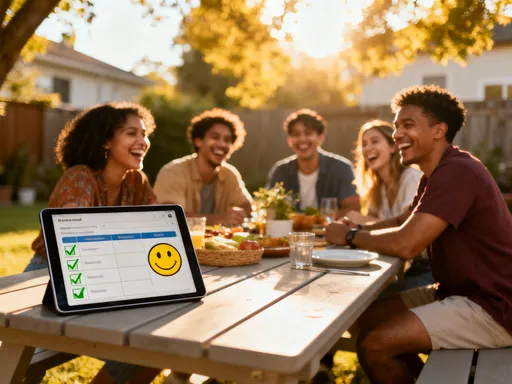
The feature that changed everything was the integrated poll and response tracker. It sounds simple, but its impact was profound. I used it for my sister’s birthday potluck last month. Instead of a messy group chat, I created an event titled 'Sarah’s 45th Birthday Feast – Bring Your Favorite Dish!' I added the date, time, address, and a fun note: 'No pressure, no perfection—just good food and great company.' Then I used the poll to ask two questions: 'Will you be there?' and 'What are you bringing?' The responses came in fast. Within a few hours, I could see who was coming, who wasn’t, and what dishes were covered. The app even showed me who hadn’t responded yet, so I could send a quick, personal nudge—without spamming the whole group.
But here’s the real magic: the tool didn’t just collect information. It protected my time and peace. I didn’t have to keep checking the chat. I didn’t have to send follow-up messages every day. The app handled the reminders. And because everything was in one place, I could plan the meal flow—making sure we had enough mains, sides, and desserts—without playing detective. I even used the comment section to share a simple rule: 'If you’re bringing a dish, please add a note so we don’t end up with five green salads.' And guess what? We didn’t. We had balance. We had variety. And when the day came, the table was full of love, not stress.
What surprised me most was how it changed the mood of the group. People commented that they loved how easy it was. My brother said, 'For once, I actually knew what was happening.' My cousin, who usually stays quiet in group chats, was the first to respond and even suggested a dessert. The tool didn’t replace our relationships—it made space for them to thrive. I wasn’t the anxious planner anymore. I was just a sister, enjoying the lead-up to a special day. And when we all sat down to eat, laughing and sharing stories, I realized something important: the best moments aren’t created by perfect planning. They’re created when planning doesn’t get in the way. Technology, when used right, doesn’t make us colder or more distant. It can actually help us show up more fully—because we’re not distracted by the logistics.
Making It Work for Your Life (Simple Setup Guide)
You don’t need to be tech-savvy to use this. I promise. Think of it like setting up a playlist—simple, intuitive, and instantly rewarding. Here’s how I do it, step by step. First, open your messaging app and start a new message with the people you want to invite. Instead of typing 'Hey, wanna get together?' look for the '+' or 'add' button—usually near the text box. Tap it, and you’ll see an option that says 'Create Event' or 'Plan Something.' Tap that. Now, fill in the basics: a clear title (like 'Family BBQ – July 20'), date, time, and location. Be specific—'backyard' or 'Central Park near the fountain' works better than 'my place' or 'the park.'
Next, add a short description. This is where you set the tone. Instead of just facts, add warmth: 'Come hungry! We’ll have grilled veggies, music, and lawn games. Kids welcome—there’s a playground nearby.' Then, use the poll feature to ask the key questions: 'Will you come?' and 'What can you bring?' You can even add options like 'I’ll bring drinks,' 'I’ll bring a side,' or 'Just coming—excited to see you all!' This makes it easy for people to respond and helps you balance the menu. Once you send it, the app does the rest. It tracks responses, sends reminders, and keeps everything in one place.
Here are a few tips that make it even smoother. First, name the event clearly—people are more likely to respond if they know what it’s for. Second, pin the event to the top of the chat if your app allows it. That way, no one misses it. Third, don’t be afraid to send a personal message to the one or two who haven’t responded after a few days. A simple 'Hey, would love to see you—let me know if you can make it!' goes a long way. And finally, use the comment section for updates: 'Weather looks great—still on for 4 PM!' or 'Brought extra chairs—plenty of space!' This keeps the group informed without cluttering the main chat. The goal isn’t perfection. It’s ease. It’s making it so simple that saying 'yes' to connection feels natural, not exhausting.
Beyond Convenience: Stronger Connections Through Better Planning
This isn’t just about avoiding double-booked dishes or missed invitations. It’s about what happens when we remove the friction from connection. When planning feels easy, we’re more likely to reach out. We’re more likely to include that cousin who’s been going through a hard time. We’re more likely to say, 'Let’s do this again soon.' I’ve noticed that since I started using this tool, our gatherings happen more often. We’re not waiting for someone to have the energy to organize. We’re not putting it off because it feels like too much work. We’re just doing it—because it’s simple.
And when the logistics fade into the background, something beautiful happens: we actually talk. At my mom’s last birthday lunch, instead of me running around asking who brought what, I sat down and really listened to my aunts’ stories. My nieces played games without me worrying about snacks. My brother brought up a topic he’d been wanting to discuss for months—and we had the space to really hear him. The tool didn’t create those moments, but it made room for them. It protected our attention so we could give it to each other.
I’ve also seen quieter connections deepen. One of my friends, who’s shy in big groups, now responds to event polls right away because she doesn’t have to type into a noisy chat. She even started adding little notes: 'I’ll bring my famous cookies—hope you like chocolate!' That small act of sharing feels like a bridge. It’s not just about the cookies. It’s about feeling seen, included, and valued. And that’s what I love most about this shift: it’s not just making life easier. It’s making connection more accessible. For the busy, the overwhelmed, the quiet, the forgetful—we all get to show up, in our own way, without the stress.
A Smarter, Calmer Way to Stay Connected
In a world that often feels too fast, too loud, too demanding, finding ways to slow down and connect matters more than ever. We don’t need more apps. We don’t need to learn complicated systems. We just need to use what we already have—more wisely. That simple event feature didn’t change my life because it’s revolutionary. It changed my life because it gave me back time, energy, and peace. It turned planning from a source of stress into a moment of care. Every time I create an event, I’m not just organizing a gathering. I’m saying, 'You matter. I want to see you. Let’s make space for us.'
And the beautiful thing is, it’s available to anyone. You don’t need the latest phone. You don’t need to pay for premium features. You just need to look a little closer at the tools in your pocket. Because sometimes, the solution isn’t out there in some new, flashy app. It’s right here, waiting to be noticed. It’s in the quiet features that don’t shout for attention but deliver real relief. It’s in the design choices that, when used with intention, help us live more fully.
So the next time you’re dreading that group chat for your book club, your family dinner, or your friend’s birthday, pause. Take a breath. And ask yourself: is there a better way? Maybe there’s a feature you’ve never tried. Maybe there’s a simpler path hidden in plain sight. Because when we make connection easier, we don’t lose the human touch—we protect it. We create space for laughter, for stories, for silence, for hugs. We show up not because we have to, but because we want to. And that, more than any perfectly planned menu or on-time arrival, is what makes a gathering truly special. It’s not about the details. It’s about the presence. And with the right tools, we can finally bring our full selves—to the table, and to each other.